You open Google, type what you need and click one of the first few results. Nobody pays for the organic ones, and every business on that page wants to be there. SEO is how they try. There's no trick to it, though plenty of sellers make it sound like magic. This guide is for owners, founders and first-time marketers. You'll get a plain definition, how Google handles a page from discovery to ranking, the main types of SEO, a starter routine, and what AI answers change.
What Is SEO and How It Works at a Glance?
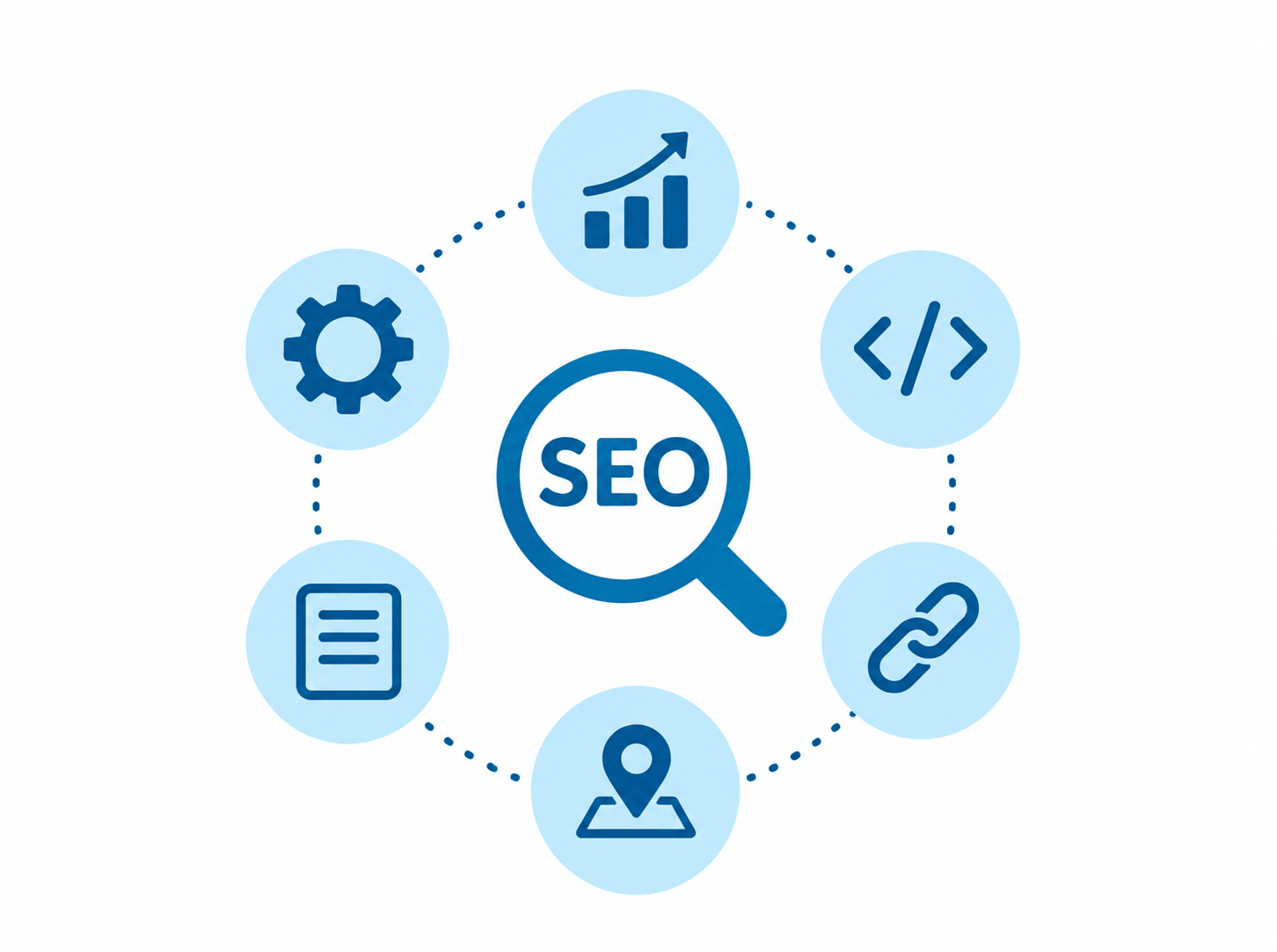
SEO, short for search engine optimization, is the work of helping search engines understand your content and helping people find your site and decide whether to visit it. That's Google's own definition. In practice you make pages Google can find, store and judge useful, then match them to what people type. You don't control the result, and no setting forces a page to rank. Good SEO raises your odds, and the gains build over months. Think of it as steady maintenance on a shop front, not a one-off launch.
It includes the words on your pages, the code behind them, the sites that link to you and, for local firms, your Google Maps listing.
Why Does SEO Matter for a Small Business?
SEO matters because organic search is free to appear in and aimed at people who already want something. Google says it never accepts money to include or rank sites in its results and that it costs nothing to appear in organic results.
That doesn't make SEO free. You pay in time or in a provider's fee, and you wait for results. Paid ads stop the day you stop paying, while a good page keeps working.
Example: A Columbus bakery gets orders only from walk-ins and Instagram. A page for "custom birthday cakes Columbus" that Google can find gives it a third source, one that runs at 2 a.m. when nobody is posting.
How Does Google Find, Store and Rank Pages?
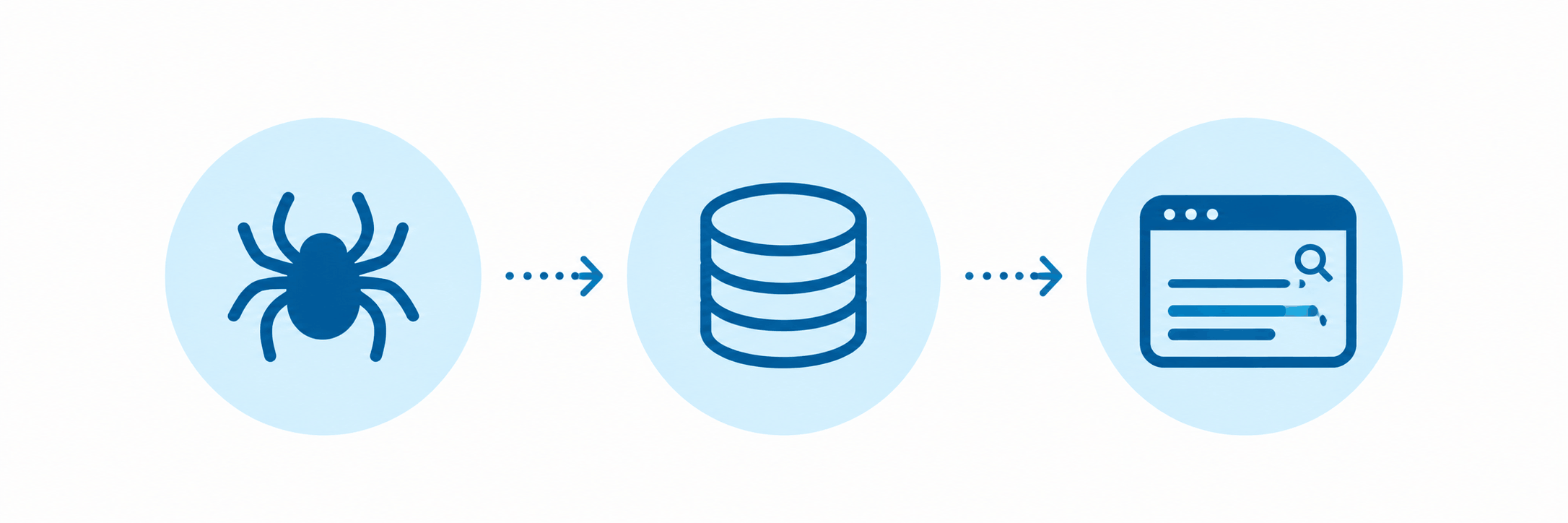
Google Search works in three stages: crawling, indexing and serving results. Not every page makes it through each stage, which is why some pages never appear anywhere.
In crawling, automated programs called crawlers download text, images and video from pages they've found. In indexing, Google analyzes what's on the page and stores it in a large database. In serving, it returns the information relevant to a person's query.
Google adds that it doesn't guarantee it will crawl, index or serve your page. Indexing isn't guaranteed either.
So check that your important pages appear in Google before you work on anything else.
What Are the Main Types of SEO?
SEO splits into four jobs that different people can own. The table shows what each covers, so you can see where your own gaps are.
| Type | Covers | Example task |
|---|---|---|
| Technical | Crawling, speed, indexing | Fix a blocked page |
| On-page | Content, titles, headings | Rewrite a vague title |
| Off-page | Links, mentions | Earn a local news link |
| Local | Maps, profile, reviews | Complete your listing |
A small shop can start with on-page and local, because both are cheap to fix. Technical problems matter when pages aren't getting indexed at all.
How Do You Start SEO Step by Step?
Starting SEO takes seven steps, and you can begin before you spend anything. Margo's guide to on-page and off-page SEO goes deeper on steps four and six.
- 1.Pick one goal, such as calls, bookings or sales.
- 2.List what customers type when they need you.
- 3.Check that Google has indexed your key pages.
- 4.Give each page a clear title and a heading that matches the search.
- 5.Write content that answers the question better than a thin page would.
- 6.Earn links and mentions from sites your customers already trust.
- 7.Review traffic and enquiries every month.
Change a few things at a time, so you can tell which one worked.
What Helps a Page Rank?
Pages rank when Google's systems judge them the most relevant and useful result. Google says its automated ranking systems look at many factors to present the most relevant, useful results in a fraction of a second.
Content quality leads. Google says E-E-A-T isn't a specific ranking factor, but signals that show good E-E-A-T are useful, so name who wrote the page and why they know the topic.
Speed counts as a signal too. web.dev says LCP should occur within 2.5 seconds and INP should be 200 milliseconds or less. The 2025 Web Almanac found 48% of mobile sites passing Core Web Vitals.
How Much Does SEO Cost and How Long Does It Take?
Appearing in organic results costs nothing, but doing SEO well costs time or a provider's fee, and no neutral price list exists. Google says you should wait a few weeks to assess a change, and some changes take several months to show.
Example (assumed figures, not a price list): A plumber pays $1,000 a month for SEO and handles 20 extra calls over six months, converting 5 into $400 jobs. That's $2,000 against $6,000 spent, so the plumber needs a longer horizon or a better page.
Judge SEO against enquiries, not rankings alone. Count calls, form fills and sales that started from a search, and write the number down each month so the trend is visible.
What Mistakes Do Beginners Make With SEO?
A common beginner path: chase rankings before pages are indexed, then hire the first person who promises a number one spot. Both cost months, and neither is hard to avoid once you've seen it.
- Writing for search engines instead of customers
- Buying links in bulk
- Skipping titles and headings
- Never checking Google Search Console
- Changing everything at once
Each of these wastes a month. The last one is the sneakiest, because after a rewrite you can't tell which edit moved the numbers.
Common Mistake: Trusting a first-place guarantee. Google says that if an SEO guarantees you first place in search results, you should find someone else.
What SEO Trends Matter in 2026?
AI answers are changing what a click is worth, but Google says the basics still apply. Its AI features guide says there are no additional requirements to appear in AI Overviews or AI Mode, and the best practices for SEO remain relevant.
Pew Research Center's 2025 study of 900 US adults found users clicked a traditional search result in 8% of visits when an AI summary appeared, against 15% when none did. Pages still need to be found, but being clicked takes a stronger reason.
Write pages that answer a question completely. Add your name, your experience and proof such as photos, prices or case details. Then check your click-through each month, since a page can rank well and still lose the click to an AI summary above it.
What Should You Do Next?
Now you know what SEO is and how it works: Google finds your pages, stores them and ranks the most useful ones. Pick one page that matters to your business, check that Google has indexed it, and improve its title and first paragraph this week. Then repeat monthly with the next page. If you want help planning the rest, Margo Digitech's AI SEO services can audit your site and set priorities. How long SEO takes is the next thing to read.
Frequently Asked Questions
Yes, you can. Google's own SEO starter guide is free, and organic results cost nothing to appear in. Start with titles, headings, useful content and indexing checks, one page at a time. Hire help when technical problems, a competitive market or lack of time slow you down.
SEO is evolving, not dead. Google says the best practices for SEO remain relevant for AI Overviews and AI Mode, with no extra requirements. Pew found fewer clicks on results when an AI summary appears, so pages need a clear reason to be visited, not just a ranking.
Appearing in Google's organic results is free, because Google says it never accepts money to include or rank sites. SEO work still has a cost in your own time or a provider's fee, so budget for it. Paid search ads are a separate product that charges for placement.
Begin with Google's free SEO starter guide and its explanation of how Search works. Then practice on one page: check it is indexed, improve its title, rewrite it to answer the query fully and track enquiries. Learning sticks faster when you apply each idea to a real site.
SEO stands for search engine optimization. Google describes it as helping search engines understand your content and helping users find your site and decide whether to visit. The term covers technical fixes, content, links and local profile work, all aimed at earning organic visibility.