Quick Overview
75% of users who search do not go beyond page 1, so there's no way to find customers without On Page vs Off Page SEO. On page signals are those that the website owner can manage directly on their website including page content quality and title tags; off page signals are those that come from other internet users linking back or leaving quality reviews on other platforms on the internet, such as Google Business Profile.
What is On-Page SEO?
Webmasters execute on-page SEO by altering a webpage's HTML code. This strategy forms the foundation of any search ranking because it ensures the site secures an exact match for a user's search intent.
In simple terms, placing exact search queries into a main heading and a URL slug lets a 15-year-old or a Google crawler instantly read the topic, matching the text seamlessly against an active browser search window.
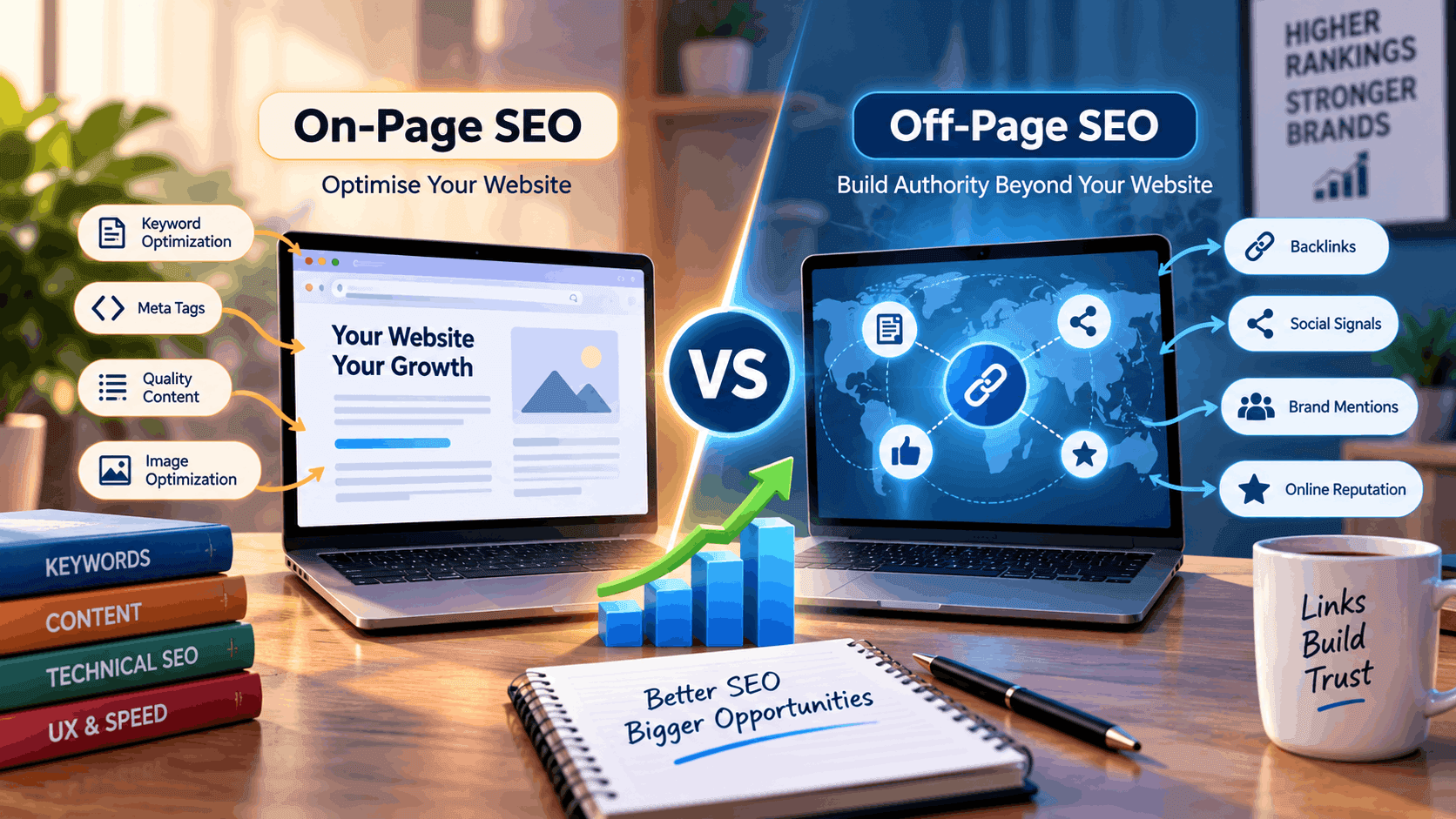
Key Elements of On-Page SEO Optimization
- Writers keep title tags between 50 and 60 characters to fit the letters visibly on a search engine results page.
- Meta descriptions summarize the page content within 105 to 160 characters, helping prevent the text from being unnecessarily truncated in search results.
- Visitors abandon slow domains, since many users expect a site to load within two seconds, while a significant percentage simply leave after three seconds.
- Image alt text describes a picture in under 125 characters for screen readers and search engines.
- Internal links map paths between different pages on a single domain so a visitor can click through the wider site catalog.
What is Off-Page SEO?
Domain hosts launch actions outside a specific website to build brand authority across the internet. Instead of typing code revisions, a business gets other reputable websites to link back to its pages. Web marketers often assume off-page SEO just means buying or building backlinks, when a complete strategy requires launching a Google Business Profile, publishing local NAP (Name, Address, Phone Number) citations to internet directories, and earning positive online reviews.
Key Elements of Off-Page SEO
- High-quality backlinks from relevant external websites act as verification votes, telling search engine algorithms the published material warrants a top ranking.
- A completed Google Business Profile loads a targeted map pin so local retail shoppers find the correct street address.
- Consistent NAP citations across web directories verify the business location.
- Social media engagement routes morning scrolling traffic back to the main storefront domain.
- Brand mentions on internet discussion boards and news publications establish domain authority even when an editor leaves out a clickable link.
Technical SEO vs On-Page SEO
While both processes happen directly on the domain, technical SEO focuses entirely on the backend server structure so that a search engine bot can crawl and index the pages. These technical setup tasks include securing SSL certifications, repairing broken site links, and writing structured data markup into the HTML template.
On-page SEO focuses strictly on the front-end elements the user reads on a screen, like selecting exact text headings, typing primary keywords into a paragraph block, and writing clear meta descriptions for the search results page.
Difference between on-page and off-page SEO
| Aspect | On-Page SEO | Off-Page SEO | How They Work Together |
|---|---|---|---|
| What it is | Optimizing your website's content and structure. | Getting links and mentions from other websites. | On-Page makes your site good, and Off-Page gets other sites to verify it. |
| Keywords | Adds keywords to your site's content. | Other websites link to your content. | Good content (On-Page) attracts links (Off-Page), boosting your search ranking. |
| Content | Creates useful, high-quality content. | Promotes your content through other sites. | Quality content gets shared, improving both On-Page SEO and Off-Page SEO results. |
| Links | Links to other pages on your site. | Other sites link to your website. | Internal links help navigation, and external links boost your authority. |
| Backlinks | Not directly involved. | Gets backlinks from other websites. | Good content brings in backlinks, improving your site's ranking. |
| User Experience (UX) | Makes the website user-friendly and fast. | Positive user interactions and shares help. | A great user experience leads to more shares and links, improving Off-Page SEO. |
| Meta Tags | Optimizes titles and descriptions for search engines. | Not directly related, but helps with sharing. | Clear meta tags encourage clicks and shares, helping SEO. |
| Social Sharing | Creates shareable content. | Gets more shares and visibility from other sites. | Shareable content boosts both visibility and backlinks, improving your ranking. |
How On-Page and Off-Page SEO Work Together
A website requires both setup processes because Google search algorithms measure page relevance and external reputation to rank regular search results.
SEO professionals generally recommend finalizing your on-page SEO before launching an off-page outreach campaign, because buying external links wastes advertising money if incoming visitors hit a broken, slow, or poorly written destination page.
For instance, a neighborhood bakery uploads a breakfast menu, clear pastry photos, and mobile-friendly site code (On-Page), which then convinces a popular local food blogger to link to the bakery domain while regular cafe customers type five-star reviews into a tracking app (Off-Page).
Popular Tools for Managing Your SEO
- Google Search Console tracks crawling logs and helps identify which external publishers link back to the target domain.
- Semrush handles keyword research, audits the site code, and monitors backlink profiles.
- Moz evaluates the total domain authority and scores incoming backlink quality across a site layout.
- System operators often run Ahrefs alongside Google Analytics and Google Keyword Planner to map visitor volume data directly against competitor backlink metrics.
Common Mistakes to Avoid in Your SEO Strategy
The most common on-page error remains keyword stuffing, where a writer forces the primary search term into every sentence unnaturally, which actively harms search rankings.
Marketing departments should also avoid acquiring spammy backlinks from low-quality directory pages. Google penalizes domains that try to cheat the reputation system instead of earning organic link placements.
A sudden influx of purchased forum comments can alert indexing algorithms to manipulated link-building practices. When an algorithm update catches this manufactured link profile, the search engine may suppress the entire domain in the search results. Removing this type of penalty may require web managers to perform a manual code audit and submit specific disavowal files.
Conclusion
Building a search presence takes time, but balancing technical page improvements with domain reputation building gives a website the best chance to rank on the first page.
Frequently Asked Questions
It is generally better to complete on-page optimization first because a clean, fast website is required before asking other domains to link back to the landing page.
Yes. Page speed can affect both user experience and search performance. Slow websites can cause visitors to leave before the page fully loads, increasing the chances of losing potential customers to faster competitors.
Yes, customer reviews on a Google Business Profile can act as off-page SEO signals. A steady flow of genuine reviews can help demonstrate that the brand operates a legitimate and trusted business.
Earning a link from a local food blogger or securing a mention in a regional news article can generate valuable off-page SEO signals without changing the website's code.
A software vendor might rank for highly specific, low-competition terms using only on-page elements. However, competing for major industry keywords generally requires external backlinks and other authority signals to strengthen the website's reputation.