Quick Overview
Defining what is user experience began at Apple in 1993, when Apple Fellow Don Norman blended engineering, marketing, industrial design, and interface construction to meet exact customer needs without friction. Today, organizations like the Nielsen Norman Group anchor this discipline in performance data, measuring how easily a person completes a specific on-screen task rather than just evaluating how the final layout looks.
What is user experience?
The International Organization for Standardization (ISO 9241-210) defines this metric as a person's perceptions and responses resulting from the use or anticipated use of a product, system, or service-a user experience meaning that tracks the entire journey someone takes to achieve a goal online, documenting whether paying a bill or booking a flight takes three simple clicks or ten confusing screens.
Jeff Johnson at the University of San Francisco notes that teams cannot directly design an experience; they can only build the specific interface features that evoke a tactile or emotional response from the person clicking the buttons.
The difference between UX, UI, and CX
| UI Design (User Interface Design) | UX Design (User Experience Design) |
|---|---|
| Focuses on the visual elements of a product that users interact with, like buttons, icons, and layouts. | Focuses on the overall experience of a user while using a product, ensuring it is smooth and satisfying. |
| Aims to create attractive and intuitive interfaces that are visually appealing. | Aims to improve usability and satisfaction, making the product easy and enjoyable to use. |
| Tools: Adobe XD, Sketch, Figma | Tools: Balsamiq, Axure, Figma |
| Emphasizes layout, colors, typography, and visual hierarchy. | Emphasizes usability, functionality, navigation, and overall flow. |
| Results in a visually engaging and appealing interface. | Results in a seamless, satisfying user experience. |
| Example: Designing a login screen that looks modern and attractive. | Example: Streamlining the login process so users can log in quickly and easily without confusion. |
IBM defines Customer Experience (CX) as a broader metric that tracks every touchpoint a person has with a company, including offline store visits and calls to the billing department. While an IT user experience focuses entirely on the digital product itself, CX maps the entire brand relationship.
Key elements that make a good user experience
UXpressia designers grade platforms against six distinct criteria.
- Usability dictates how quickly a person can learn the system architecture and operate the controls to finish a specific task, like resetting a forgotten account password.
- Interface accessibility ensures individuals with visual or motor impairments can still navigate the platform using screen readers or keyboard shortcuts, a backup protocol that prevents disabled buyers from being locked out of the catalog (which keeps the merchant compliant with legal access standards).
- Aesthetics cover the visual appeal, though a common mistake teams make is prioritizing a beautiful design over the fast loading speeds required to maintain a good user experience.
- Platform performance measures exactly how quickly a server returns the requested page or responds to a button tap.
- Credibility builds platform trust through professional layouts and clear citations.
- Desirability attaches an emotional connection to the corporate brand, keeping targeted buyers engaged longer.
Why user experience meaning matters for businesses
A clean navigation structure directly increases conversion rates because it drops the number of clicks required for a buyer to reach the checkout screen. In a market flooded with identical software tools, companies capture market share simply by making their dashboard easier to read than the competitor's version. This measurable reduction in buyer effort forms the core of a practical user experience design definition.
While readable interfaces drive inbound revenue, watching how visitors move through a site prevents operational waste. IBM notes that businesses tracking user behavior catch navigation errors early, which reduces ongoing customer support costs since fewer people call the help desk for assistance.
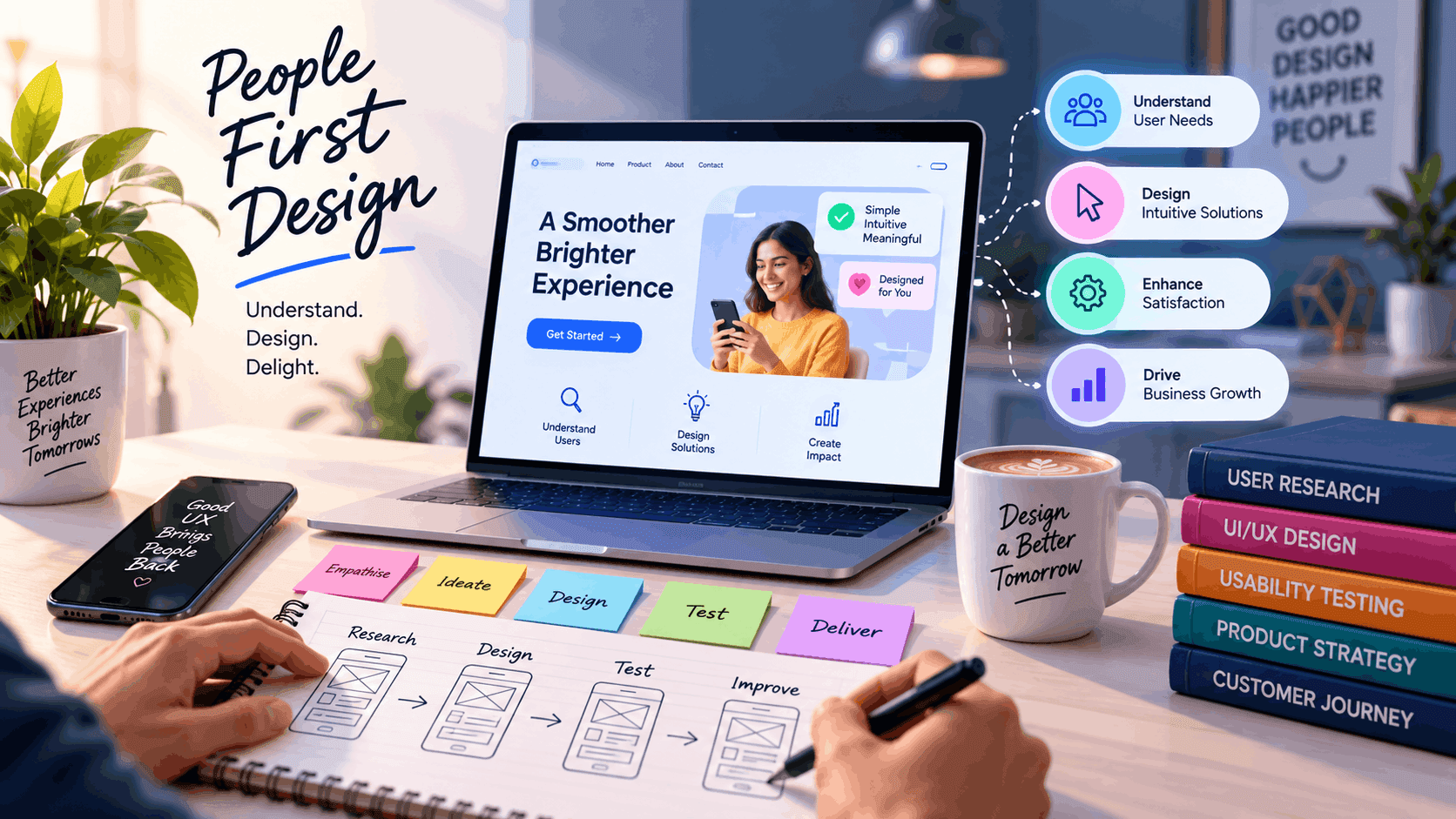
The user experience design process
- 1.Teams conduct interviews and deploy surveys to identify exactly where current customers get stuck.
- 2.Researchers translate interview transcripts into clear problem statements and user personas.
- 3.The group sketches multiple workflow layouts to explore different interface solutions.
- 4.Designers map out interactive wireframes.
- 5.Real people attempt to navigate the prototype while researchers record where they click.
According to Figma's 2025 AI report, 40% of designers and 29% of developers now use artificial intelligence tools to analyze this user testing data and spot friction points faster.
Real-world examples of user experience
The Nielsen Norman Group highlights that a flawless visual interface cannot fix a structural user experience failure. If a person visits a movie review website looking for a small independent film, the site fails that person if its backend database only stores releases from major Hollywood studios. Even if the search bar functions perfectly and the typography looks clean, the buyer leaves frustrated because the underlying system lacks the required information.
Conclusion
Building a digital product requires mapping the exact journey a buyer takes from the first click to the final receipt. Teams that coordinate their engineering, marketing, and design departments eliminate dead ends and capture market share faster.
Frequently Asked Questions
As the role comparison table above shows, the two positions operate distinct software and track separate metrics. A graphic designer manipulates visual layouts and selects brand colors inside Sketch. Interface specialists map wireframe sequences and log usability failure rates using testing platforms like Axure and Balsamiq.
As established by the Figma 2025 AI data discussed earlier, 40% of designers deploy artificial intelligence algorithms during the initial research phase. Survey respondents prompt language models to extract trends from customer feedback logs and isolate menu navigation errors.
IBM tracks behavioral metrics by measuring drop-off percentages on shopping cart screens and counting how many buyers open a help-desk ticket to finish a purchase transaction.
The discipline extends to consumer hardware products. A wall-mounted smart thermostat demands clear menu mapping and immediate button responses equal to the navigation standards expected from an electronic banking application.
Shipping an application without keyboard navigation blocks site access for individuals living with motor impairments. Skipping these features violates the core elements outlined earlier in this guide. Brands omitting screen-reader support hand their retail market share to competitors who ship compliant digital stores