Page Authority Explained
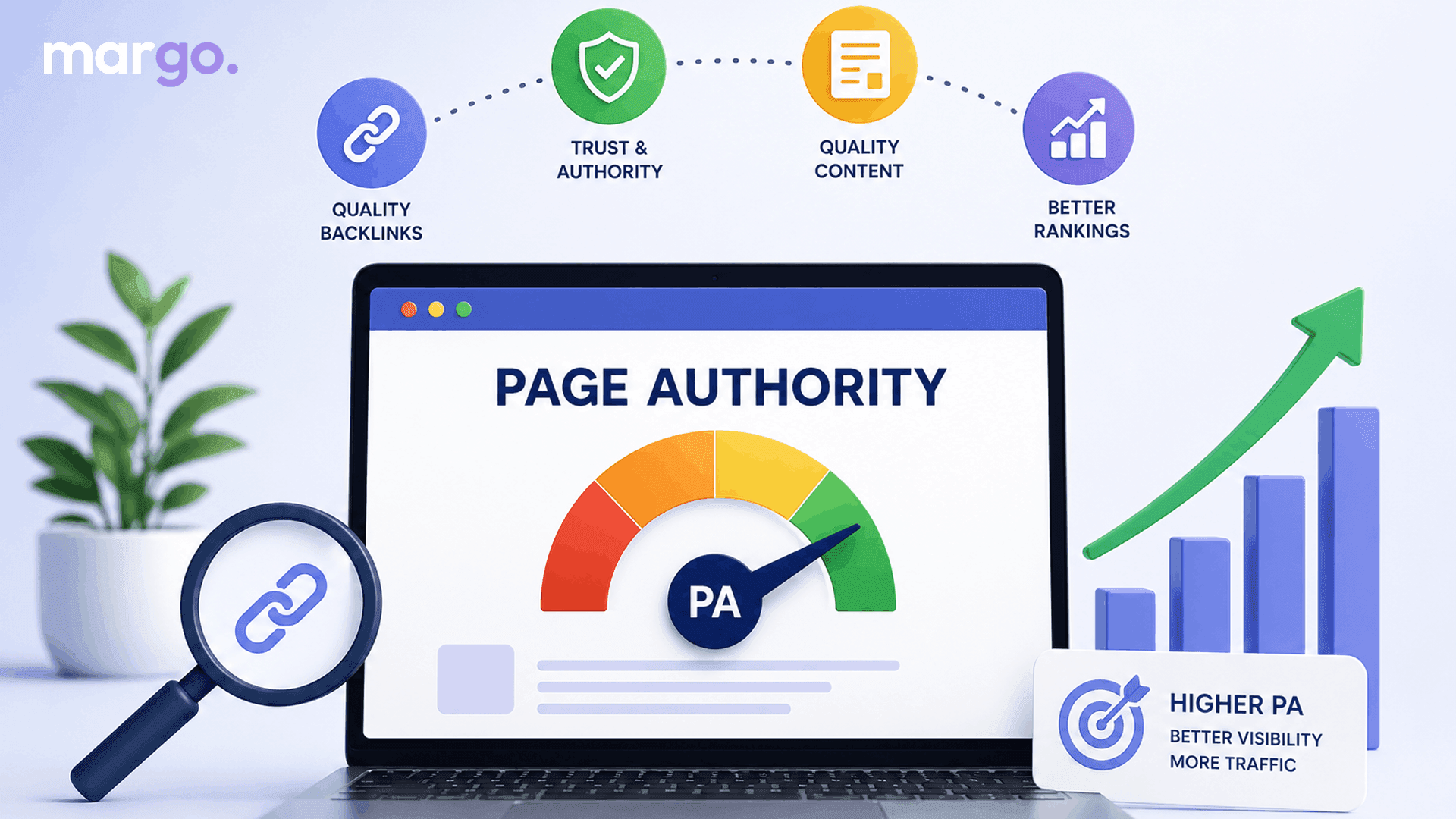
Page Authority (PA) is a search engine ranking score that was created by Moz and shows how likely it is that a certain web page will rank in search engine results pages (SERPs). Domain Authority (DA) is a score that predicts how well a website ranks overall. Page Authority (PA) is a score that predicts how well a specific URL will rank.
The score is on a logarithmic scale, from 1 to 100. The higher the score, the better you are likely to do. One important thing to know is that Google does not use or recognize PA as a metric. Instead, it's a third-party estimate based on a machine-learning model that examined patterns in the most popular web pages. Moz looks at a lot of things, such as link profiles, to estimate how well a page might do.
PA works best if you compare two pages side-by-side, for example your blog post vs. a competitor's article with the same keyword. That's because PA is a predictive score and not a direct ranking factor.
What Factors Influence Page Authority?
There are numerous different signals that help determine a page's authority, and most of these signals relate to the page's backlink profile. The most important factors are the following:
- Number of linking root domains: Pages that receive backlinks from a variety of different websites tend to rank better than pages that receive links from only a small number of sources.
- Quality of linking domains: A link from a well-known, trustworthy site is worth more than one from a spammy or low-quality domain.
- Backlinks (total number): Quality is the important thing, but a good number of links helps your score.
- Link diversity: A natural mix of link types such as editorial links, directory listings, social mentions, etc. shows the site is growing organically and not just by manipulation.
- On-page relevance: This signals PA is mainly a link-based metric, but content relevance and internal linking structure can help it in other ways. It's worth noting that PA is recalculated each time Moz updates its index. That means you can't just change nothing on your page and expect your score to stay the same, because the competition has changed.
Domain Authority vs. Page Authority
A lot of people get PA and Domain Authority mixed up, so it's helpful to make the difference:
- Taking into account the authority of each page and link on the site, Domain Authority (DA) tells you how well a whole domain will rank.
- Page Authority (PA) tells you how well one page will rank on its own, without taking into account the rest of the domain.
Some pages on a website may have a low PA even tho the website as a whole has a high DA. This is especially true if the pages are new and do not yet have many backlinks. The site itself may have a low Domain Authority, but one page may have a high PA. It may be a resource that gets a lot of citations or content that goes viral.
How to Check Page Authority?
There are a few different ways you can look at the SEO Authority score of any page:
- Moz Link Explorer (the first and most direct tool, since Moz created the PA metric): Just paste a URL into Link Explorer to check its current score.
- MozBar Browser Extension: Use this free browser add-on to see PA and DA right in your search results and on any page you visit, allowing you to easily research on the go.
- Third-party SEO tools: Many all-in-one SEO platforms have "authority" or "strength" scores like Moz's. This means you can check PA, as well as other metrics like keyword rankings and traffic estimates.
- Bulk analysis tools: If you want to check many URLs at once, for instance, a whole blog archive, bulk PA checkers can save you a lot of time by processing lists of URLs in one go.
When you use a page authority checker, don't forget to compare scores in the context of the page. A PA of 40 might be great in a niche with little competition but not great in a highly competitive field like insurance or finance.
How to Increase Page Authority
You can't cheat a single number to raise your Page Authority score. Instead, you need to strengthen the signals that help pages rank higher in real search results.
Here is some tried-and-true advice:
1. Get Quality Backlinks
The trick is to get links from popular sites that are relevant to yours. Guest posting, digital PR, original research, and creating content that people will want to link to (e.g., data studies or deep-dive guides) are effective long-term strategies.
2. Optimize Internal Linking
Link to your important pages from other good pages on your site. It distributes authority throughout the site so search engines can identify the most important pages.
3. Eliminate or Disavow Bad Links
The spam score is affected by too many spammy or irrelevant backlinks. So check out your link profile from time to time and remove bad links.
4. Create Evergreen, Shareable Content
So time-sensitive content stops earning links once it stops being useful for a while, but content that stays useful over time will tend to earn links naturally.
5. Enhance On-Page SEO
While PA is all about links, good on-page SEO such as clear headings, keyword-optimized titles, fast load times, and mobile friendliness makes your page more shareable and worthy of links.
6. Practice Patience and Consistency
With time comes authority. The issue is, when you attempt to get links quickly and artificially, it can backfire, even to the point of penalties. PA requires steady growth over months through consistent content and outreach efforts.
Final Thoughts
A page's Page Authority can help you guess how well it might do in search results compared to other pages that are similar to it. Even though it's not a page authority ranking factor in and of itself, it has a strong relationship with factors that do affect rankings, especially the number and quality of backlinks to a page.
You should not use PA as a goal, but as a way to measure your progress. For the most comprehensive picture of your SEO progress, you should be monitoring it in conjunction with real performance indicators such as organic traffic, keyword rankings, and conversions. Your Page Authority and actual search visibility will both go up over time if you consistently get good backlinks, improve internal linking, and publish content that people will want to cite.