Quick Overview
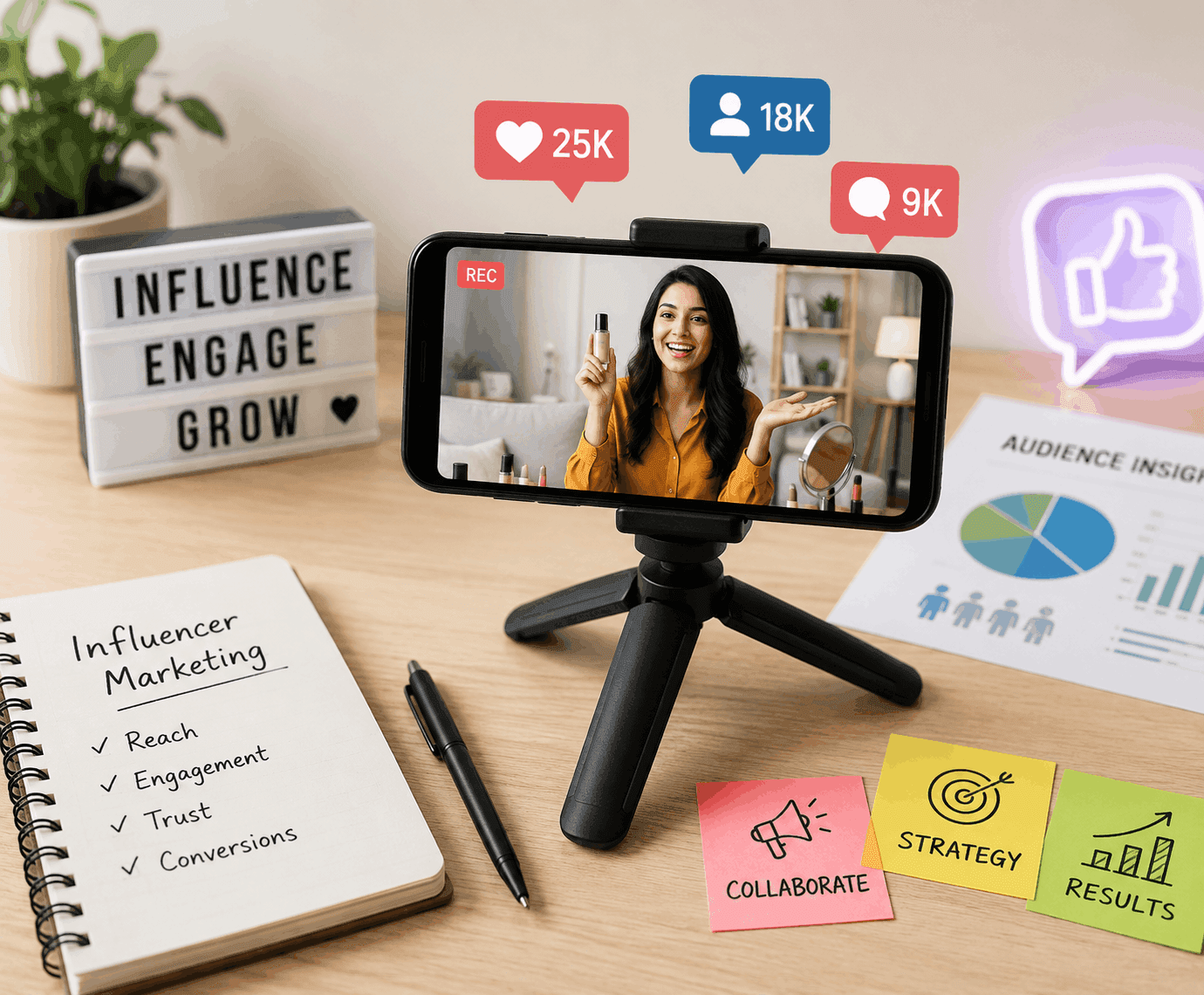
Understanding what influencer marketing is with observing modern checkout habits, as Sprout Social's State of Influencer Marketing Report notes that 86% of shoppers buy a creator-promoted item at least once a year. This documented purchase volume drove the global market from a $1.7 billion valuation in 2016 to roughly $21.1 billion by 2023. A product placement purchase here makes these recommendations a direct social proof, allowing product managers to 'intercept' specific user segments as they browse Instagram, TikTok and YouTube without delay.
What is influencer marketing?
Companies buy visibility by paying internet creators a flat fee. This direct transaction defines the influencer marketing meaning, where advertising teams issue cash or a sales commission to individuals generating sponsored content on their personal Instagram, TikTok, and YouTube accounts.
Rather than buying empty ad space directly from a broadcasting network, media buyers rent the authority a digital marketing influencer has already accumulated with their daily audience. According to Influencer Marketing Hub, 49% of consumers depend on these specific recommendations before they spend money, which forces retail chains to fund creator campaigns to capture checkout register sales during product launches.
The history and influencer marketing future
The early 2000s economic downturn sank expensive corporate television commercials. Tighter marketing budgets pushed brands to abandon national broadcast stations and purchase cheaper online advertisements. As internet providers installed widespread broadband access and software developers launched early social media sites, everyday people began gathering huge follower bases that previously only movie stars or professional athletes could command.
Media planners mapping the influencer marketing future look toward explosive regional markets—such as mobile consumer networks across Asia—because financial analysts tracking digital marketing influencers projected the Indian creator economy alone would grow 25% by 2025.
Why brands use digital marketing influencers
Glossier ships bottled cosmetics to internet creators for camera demonstrations. Marketing departments tracking campaign ROI measure these returns closely, as companies earn an average of $5.78 for every dollar they spend on creator partnerships, according to data from Influencer Marketing Hub.
Precise targeting: Creators gather specialized buyer groups around tight niches, allowing a brand selling facial moisturizer to sponsor creators who intercept consumers watching local skincare tutorials, capturing a high conversion rate at checkout.
Trust transfer: An endorsement from a recognizable internet host gives an unfamiliar cosmetic line instant credibility, skipping the long months a brand normally spends establishing basic consumer recognition in shopping aisles.
Content volume: Working with fifty micro-influencers gives a brand direct social proof, fifty different videos, photos, and authentic reviews at a fraction of one traditional agency shoot's cost.
Types of influencer marketing and platform costs
Media companies and retail brands sort internet creators into five payout tiers based on audience size. This categorization determines the cost of different types of influencer marketing, as a video host commands a different flat rate for a short vertical video on TikTok compared to an extended product review on YouTube. Coursera outlines standard rates across the three main platforms depending on the creator tier.
| Type of Influencer | Number of Followers | TikTok | YouTube | |
|---|---|---|---|---|
| Nano | 10,000 or less | $10-100 | $5-25 | $20-200 |
| Micro | 10,000-50,000 | $100-500 | $25-125 | $200-1,000 |
| Mid-Tier | 50,000-500,000 | $500-5,000 | $125-1,250 | $1,000-10,000 |
| Macro | 500,000-1 million | $5,000-10,000 | $1,250-2,500 | $10,000-20,000 |
| Mega | 1 million or more | $10,000+ | $2,500+ | $20,000+ |
How to build an influencer marketing strategy
Media buyers organizing an influencer marketing strategy identify a target market and map those specific viewers to a matching video feed, as Sprout Social data indicates that TikTok attracts Generation Z females 24 and under while YouTube viewership tilts male.
Marketing departments set a concrete budget using the average pricing tiers above and allocate secondary funds to buy usage rights for future paid advertisements.
Advertising buyers prioritize engagement rates over raw follower counts, because a micro-influencer holding the attention of 15,000 active fans drives more checkout sales than a celebrity with a million passive subscribers.
Campaign managers send a clear creative brief outlining the required deliverables and payment structure while leaving the internet host free to write their own script.
Real-world examples and common mistakes to avoid
Business-to-business and utility companies often ignore this channel, but niche audience targeting produces buyers in complex hardware industries. Technica Communications managed a highly specific campaign for the Winnebago Specialty Vehicle Division by preparing pitch documents in Canva to share with targeted internet hosts. The agency hired travel blogger Cory Lee alongside the creators behind Roll with Cole & Charisma-individuals who use wheelchairs-to test and promote Winnebago's Accessibility Enhanced motorhomes.
The most common mistake marketing teams make is writing highly restrictive briefs that force creators to read a stiff, corporate script. When companies restrict creative freedom, the resulting video feels like a traditional television commercial, instantly breaking the authenticity that makes the strategy work.
Conclusion
Internet users scroll past commercial banners to buy store items endorsed by peers they already trust. By matching a specific inventory product to a creator whose audience fits the ideal customer profile, companies secure strong conversion rates at a lower cost than traditional digital ads.
Frequently Asked Questions
Businesses make $5.78 for every dollar spent on these campaigns, according to a survey from Influencer Marketing Hub. This is the return that retailers can get, by targeting specific groups of Internet subscribers, rather than buying general television airtime. When a marathon runner is paid to test the shoes on a dirt trail, it's a high inbound conversion for a shoe manufacturer. The viewer believes the creator's own judgment and clicks on the link on a new tab and purchases the shoes online.
The pricing table above puts a TikTok micro-influencer at between $25 and $125 per video.
Marketing departments pay affiliates a percentage of revenue only when a customer clicks a trackable link and completes a purchase at a checkout register. Creators operate differently by charging a flat upfront fee to upload a sponsored video, and they collect this payment even if their audience buys nothing.
Direct-to-consumer software startups like Canva pay internet hosts to demonstrate their design application during video tutorials. Traditional hardware manufacturers duplicate this strategy, tracking back to the Winnebago RV campaign detailed earlier where outdoor vloggers drove motorized campers across the country.
A channel owner with 10,000 followers or fewer fits this profile. Agencies contract these smaller internet personalities because their subscribers consistently leave comments and share links, yielding high engagement in exchange for a lower flat rate.