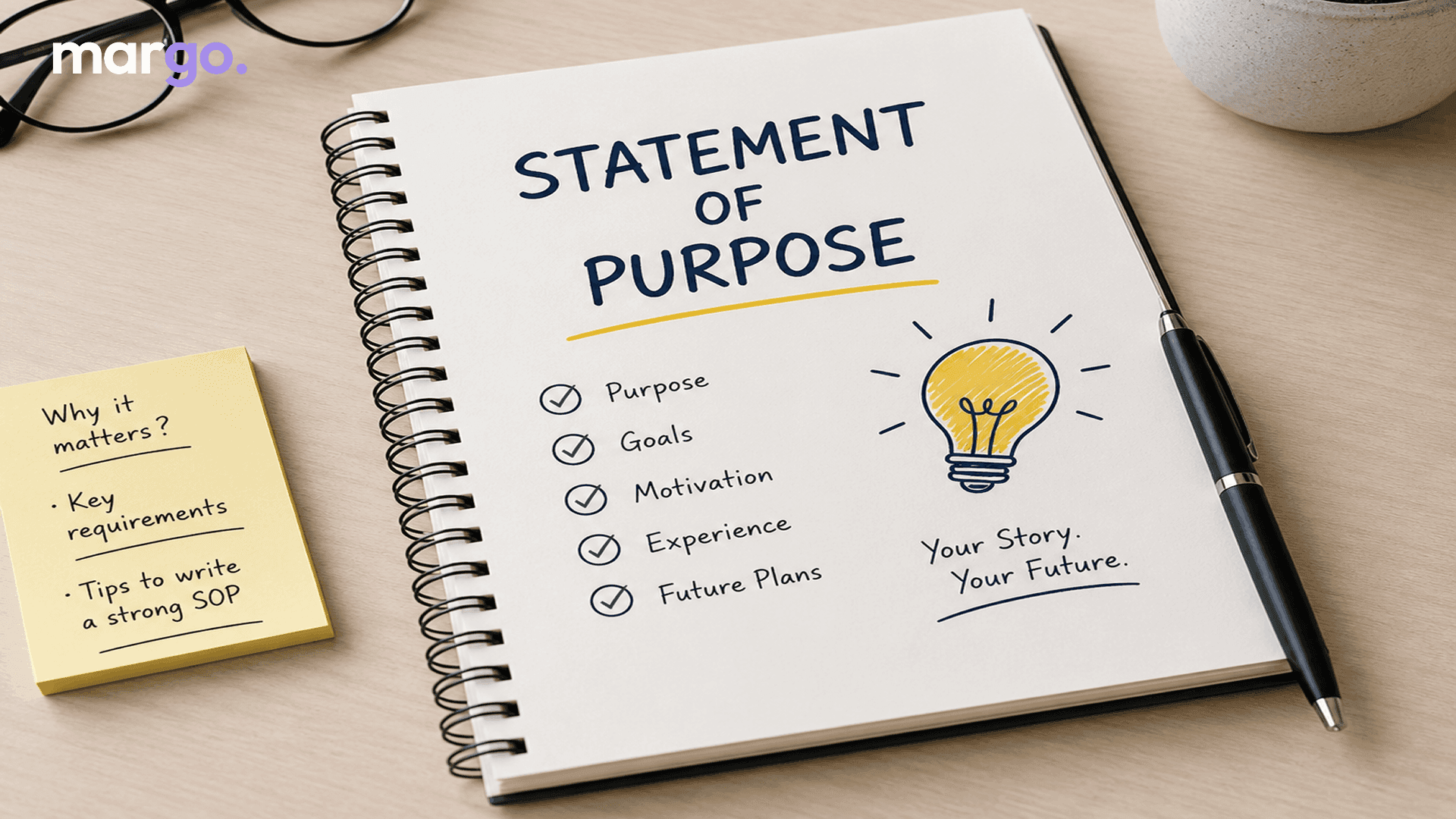
If you are applying to a university, graduate program or scholarship, chances are you have come across one requirement that feels harder than the rest: the Statement of Purpose. This document is asking you to tell, in your own words, who you are and why you are a fit for the program. This is not a test score or transcript. Let's get into what it is, why it's important, and how to write one that stands out.
Statement of Purpose Definition
SOP full form in education is mostly abbreviated to Statement of Purpose. It is a personal essay prepared as part of an academic application. It describes your educational background, your career goals, and why you've chosen the specific program or school.
What is a statement of purpose in simple words? This is your chance to go beyond the grades and test scores, and to tell admissions committees who you are, what drives you, and why you're a great fit for their program.
Why is Statement of Purpose Important?
Admissions committees receive hundreds, if not thousands, of applications with similar academic credentials. Your SOP could be the deciding factor because it:
- Shows your motivation and purpose
- Shows your writing and communication skills
- Demonstrates your understanding of the program you are applying to
- Assists in differentiating you from other applicants with comparable scores
- Provides background for any gaps, transitions or unique experiences in your journey
A strong SOP can make up for a slightly lower GPA or test score, and a weak one can hurt an otherwise impressive application.
SOP Prerequisites
Before you begin writing, it's important to understand what typical SOP requirements are, as they differ by institution:
- Word or page limit: Usually 500-1,000 words, tho some programs have specific limits
- Specific Prompts: Some schools do not ask a general essay but a specific question
- Formatting rules: Font, spacing and margin rules
- Submission format: Most are submitted digitally, but some programs require a handwritten statement of purpose for verification.
But always verify the specific guidelines of your program, as submitting an SOP that does not adhere to stated requirements can hurt your application, regardless of how good the content is.
Sample Statement of Purpose
The content is individual, but the format of the statement of purpose for most strong SOPs looks similar:
- Introduction: Good introduction showing your passion or a moment in your academic career.
- Academic Experience: Courses, projects, or research that led you to this program
- Professional or Practical Experience: Internships, employment, or practical work in your field.
- Why This Program: Specific reasons you are applying to this school. Add faculty, resources, or curriculum.
- Future Goals: How you intend to use this degree, short-term and long-term
- Conclusion: Finish with a compelling statement that wraps up your story and reinforces your fit.
How to Write a Statement of Purpose
Want to know how to write a statement of purpose that will actually get noticed? Do the following:
1. Hook 'Em with Something Real
Since I was a child, I always had an interest in photography. Start with an incident, problem or insight that sparked your interest in the field
2. Be Specific, Not General
"I want to help people" is a very vague statement, which doesn't stand out. Be clear about what you want to do and why. Use your own experience
3. Link your Story to the Program
Please specify the profs/research areas/courses/ opportunities at the school. "This is proof of real interest, not a copy-paste application"
4. Show, Don't Tell
Don't tell, show. I want to be a professional musician. I'm very passionate about my music. Instead, tell a story of a project, challenge or success that illustrates this.
5. Edit Ruthlessly
It takes many drafts to write a strong SOP. Trim the fat, tighten your story, and make each word count
How to Write a Good SOP: Common Mistakes to Avoid
Knowing how to write a good SOP also involves knowing what not to do:
- Don't just copy your resume; make it detailed.
- Avoid clichés and melodramatic language.
- Stay within the word limit.
- You should never send a generic SOP to multiple schools.
- Don't overdo the fake-sounding jargon.
Conclusion
Statement of purpose is more than just a formality. It's an opportunity to present something other than the numbers on your transcript to the admissions committee. Sometimes the difference between rejection and acceptance is taking the time to think things through, organize your thoughts clearly and revise thoroughly.
Frequently Asked Questions
A statement of purpose is a personal essay that you submit with your academic applications. It details your background and goals, and why you want to apply to a particular program.
SOP stands for Statement of Purpose, and it is a document that is usually required for university and graduate school admissions.
Most SOPs are between 500 and 1,000 words, but exact limits depend on the requirements of the particular program.
No. Most SOPs are submitted in digital format, but some of the institutions may ask for a handwritten statement of purpose for verification purposes.
The biggest mistake is to write a generic SOP that does not tie your personal story to the specific program. This has a copy-paste feel to it rather than authenticity.