Switching store platforms later means new URLs, redirects and a dip in search rankings, so the first choice matters. Shopify vs WooCommerce is the decision facing every new Indian online store, and your monthly online sales decide a large part of it. This guide is for founders, D2C brands and marketers about to pay for a store. It shows what each platform costs in rupees, how fast each one loads, how cash on delivery and GST fit, and a seven-step test that picks one for you.
What is the difference between Shopify and WooCommerce?
Shopify is a hosted store builder that you rent every month, and WooCommerce is a free plugin that turns a WordPress website into a store you run yourself. Shopify bundles hosting, security, updates and checkout into one bill. WooCommerce gives you the source code and full control, and you buy hosting, extensions and developer time separately. Neither is cheaper by default, because a WooCommerce bill depends on the host and plugins you choose. Launching next week suits Shopify, and custom checkout rules suit WooCommerce.
WordPress.org lists 7+ million active WooCommerce installations. Before you compare prices, decide who will fix the store when it breaks, because that answer shapes every other choice.
How does Shopify vs WooCommerce compare at a glance?
Shopify launches faster and passes Google's speed checks more often, and WooCommerce takes no cut of your sales and hands you the whole codebase.
| Factor | Shopify | WooCommerce |
|---|---|---|
| Platform cost | ₹1,499 to ₹22,680 a month | ₹0 for the plugin |
| Fee on each online order | 2% down to 0.6% | 0% from WooCommerce |
| Hosting and security | Included | You buy and manage |
| Good Core Web Vitals | 76% of stores | 33% of stores |
| Code control | Themes and apps | Full source code |
| Who fixes breakages | Shopify | You or your developer |
The speed row comes from the 2025 Web Almanac, which measured desktop stores. With no developer on your team, give the last row the most weight.
How much does each platform cost in India?
Shopify starts at ₹1,499 a month on yearly billing, and WooCommerce's plugin is free but needs a paid host and paid extensions.
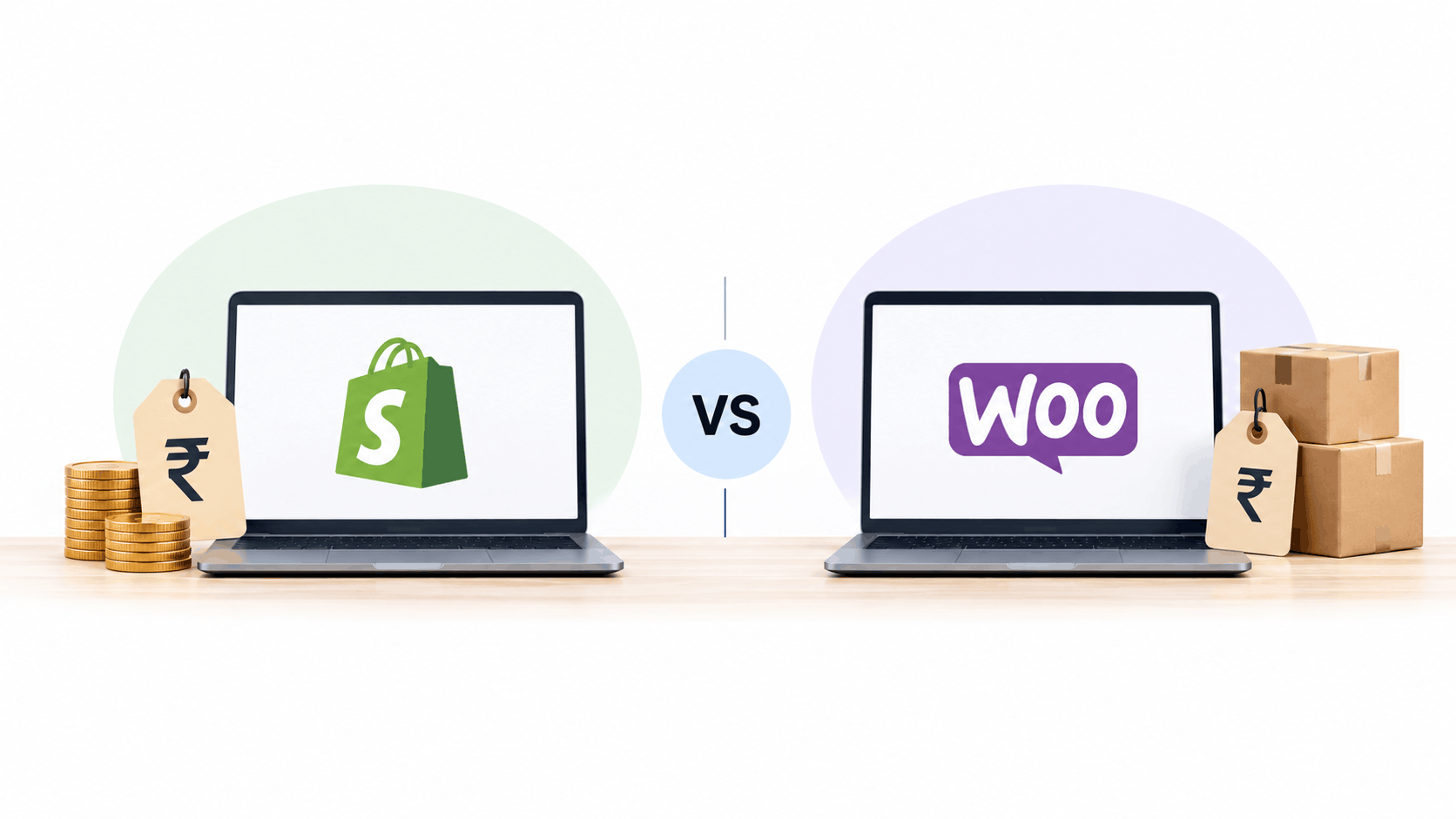
Grow, Shopify's middle plan, costs ₹5,599 a month. WooCommerce's pricing page puts hosting at $25 to $350 a month.
Shopify Payments is not available in India, so every online order goes through a third-party gateway and carries Shopify's fee, 2% on Basic and 1% on Grow. Do the sum with your own sales. Below ₹4.1 lakh a month, Basic costs least. Above it, Grow wins.
Example (assumed figures, not a price list): a Jaipur jewellery brand selling ₹6 lakh online each month pays ₹13,499 on Basic and ₹11,599 on Grow.
Which platform is easier to set up and run?
Shopify is easier for a first launch, because you choose a theme, add products and start taking orders without touching a server.
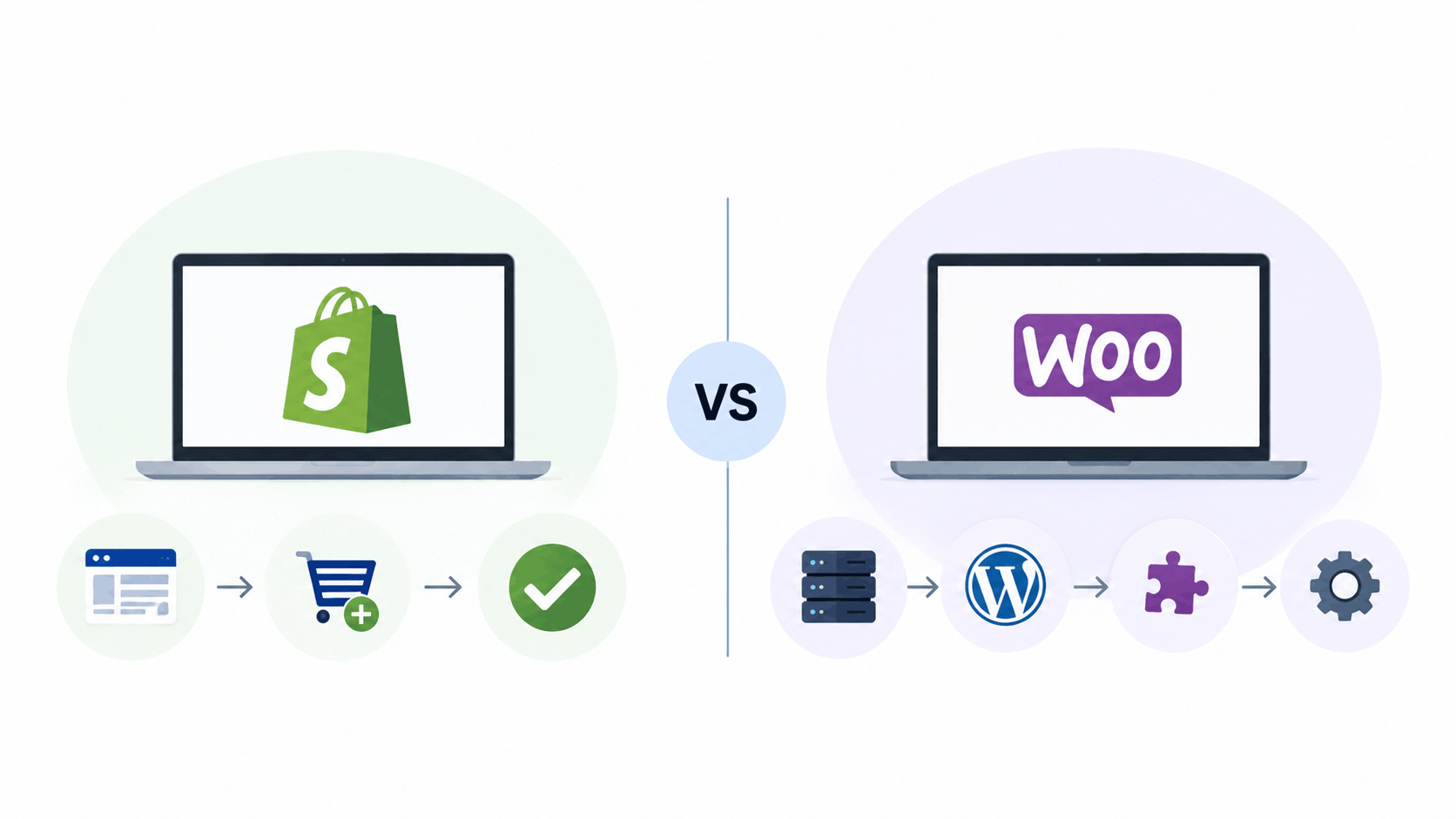
A free 3-day trial needs no credit card, which is enough time to add a few products and test checkout. Apps add extras such as reviews or WhatsApp alerts, and each app can bring its own monthly fee.
WooCommerce asks more of you. Someone has to manage hosting, backups, WordPress updates and plugin clashes, and that someone is you or a developer you pay. The reward is control. Checkout fields, wholesale price lists and made-to-order options can all be built to fit.
Example: a Pune furniture maker with a developer on retainer can add made-to-order options to WooCommerce. A founder running alone in Ludhiana will launch faster on Shopify.
Which platform is better for SEO and site speed?
Shopify stores pass Google's Core Web Vitals, the speed and stability checks run on real visitors, far more often than WooCommerce stores do.
The HTTP Archive Web Almanac 2025 found good scores on 76% of Shopify desktop stores and 33% of WooCommerce stores. Loading is the gap. For 92% of Shopify stores the main content appeared fast enough, against 45% of WooCommerce stores. Google's web.dev guidance sets that limit at 2.5 seconds.
Google uses the mobile version of a page for ranking, so check your store on a phone. A slow WooCommerce store can be fixed, because the host, the images and the plugins are all yours to change. Our ecommerce SEO guide covers what to fix first on either platform.
How do payments, COD, GST and shipping work on each platform?
Both platforms can take Indian gateways, cash on delivery (COD) and GST invoices, but each one needs a test order before you launch.
WooCommerce lists Cash on Delivery as its own payment gateway and keeps those orders at Processing until the cash is collected. Shopify ties its fee to third-party payment providers, so check in the free trial how a COD order is treated before you set your margins.
Open a test invoice and confirm it shows your GSTIN (your GST registration number) and the HSN code (the product classification code). It should also split CGST and SGST, or charge IGST on sales to another state.
Confirm that your courier partner and your gateway both offer an app or plugin for the platform you pick.
How do you choose the best ecommerce platform in India?
Seven checks settle the choice, and you can finish all of them in one afternoon with your own numbers.
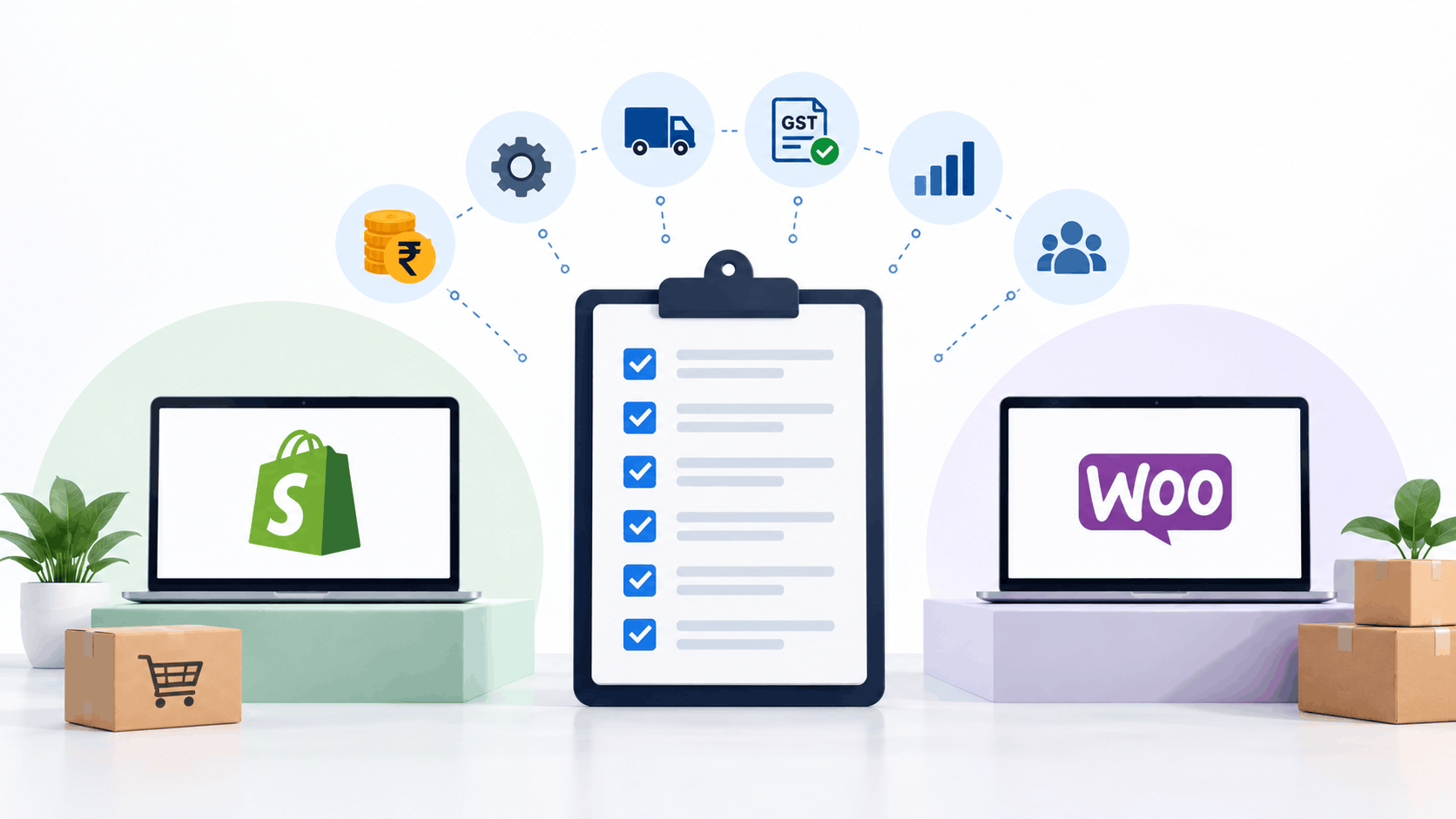
- 1.Estimate your monthly online sales for the next 12 months.
- 2.Price Shopify at that level, gateway fee included.
- 3.Price WooCommerce, including the host, extensions and developer time.
- 4.Count your tech staff. If the answer is zero, lean towards Shopify.
- 5.Place a COD test order on a Shopify trial and on a WooCommerce demo.
- 6.Open the checkout on a mid-range Android phone over mobile data.
- 7.Check that you can export products, customers and orders as files before you commit.
As a rule of thumb, when the two yearly totals are within 10% of each other, pick the platform your team can run without outside help.
What mistakes and challenges should you expect?
Each platform has its own expensive mistakes, and each is cheaper to avoid before launch than to repair afterwards.
- App fees pile up on Shopify as you add reviews, upsells and alerts.
- A 2% gateway fee can wipe out the profit on a low-margin product.
- Cheap shared hosting slows WooCommerce.
- Updating a plugin in the middle of a sale can break checkout, so test every update on a copy of the store first.
- Moving platforms later means rebuilding URLs, setting up redirects and waiting for rankings to recover.
Common Mistake: choosing WooCommerce only to avoid the monthly fee, then running a dozen plugins on the cheapest host.
A slow store hurts on either platform. Our guide to website performance optimization shows where to start.
What ecommerce platform trends matter in 2026?
WooCommerce still leads on share of ecommerce sites, Shopify keeps gaining, and e-commerce advertising in India is growing fast.
The 2025 Web Almanac puts WooCommerce on 35.4% of ecommerce sites and Shopify on 21.5%, with Shopify up about a point in a year. The FICCI-EY report says e-commerce and point-of-sale advertising in India grew 50% to ₹220 billion in 2025.
More advertising means more stores competing for the same shoppers. A store that loads quickly on a phone keeps more of the visitors you pay for, so test yours on a phone over mobile data before you spend on ads.
What Should You Do Next?
Shopify suits sellers who want a quick launch and little upkeep, and WooCommerce suits sellers who want full control and have technical help. Run the seven checks with your real monthly sales figure and a yearly cost sheet in rupees before you pay for anything. If Shopify vs WooCommerce still looks close, our ecommerce web design team can review your products, budget and growth plan in one call, then build the store on the platform that fits your business.
Frequently Asked Questions
Shopify's biggest disadvantage in India is a cost that rises with your sales. Shopify Payments is not available here, so each online order carries a 2%, 1% or 0.6% fee depending on the plan, and apps can add monthly charges. You also rent the store, so you control less of the code.
Shopify is worth it when you want a quick launch and have no developer, and its stores pass Google's speed checks far more often than WooCommerce stores. Below ₹4.1 lakh of monthly online sales, the Basic plan keeps costs low. Above that level, Grow's lower fee starts saving money.
WordPress builds websites and Shopify builds stores, so the fair match is Shopify against WooCommerce, the free plugin that adds a store to WordPress. WooCommerce gives control and takes no cut of sales. Shopify gives hosting and upkeep in one plan. Choose by who will maintain the store.
The HTTP Archive Web Almanac 2025 ranks WooCommerce first with 35.4% of ecommerce sites, Shopify second with 21.5% and Squarespace Commerce third with 9.1%. These shares count websites, not sales, so a bigger share does not make a platform the right fit for your store.
WooCommerce gives more control over code and technical SEO, but Shopify stores pass Core Web Vitals at a much higher rate: 76% against 33% in the 2025 Web Almanac. Google says no single signal decides page experience, so strong product pages and a fast host matter on either platform.
WooCommerce has the lower platform cost, because the plugin is free and takes 0% of sales. Its pricing page puts hosting at $25 to $350 a month, and extensions cost extra. Add developer time, then compare yearly totals with Shopify's plan and gateway fee at your own sales level.