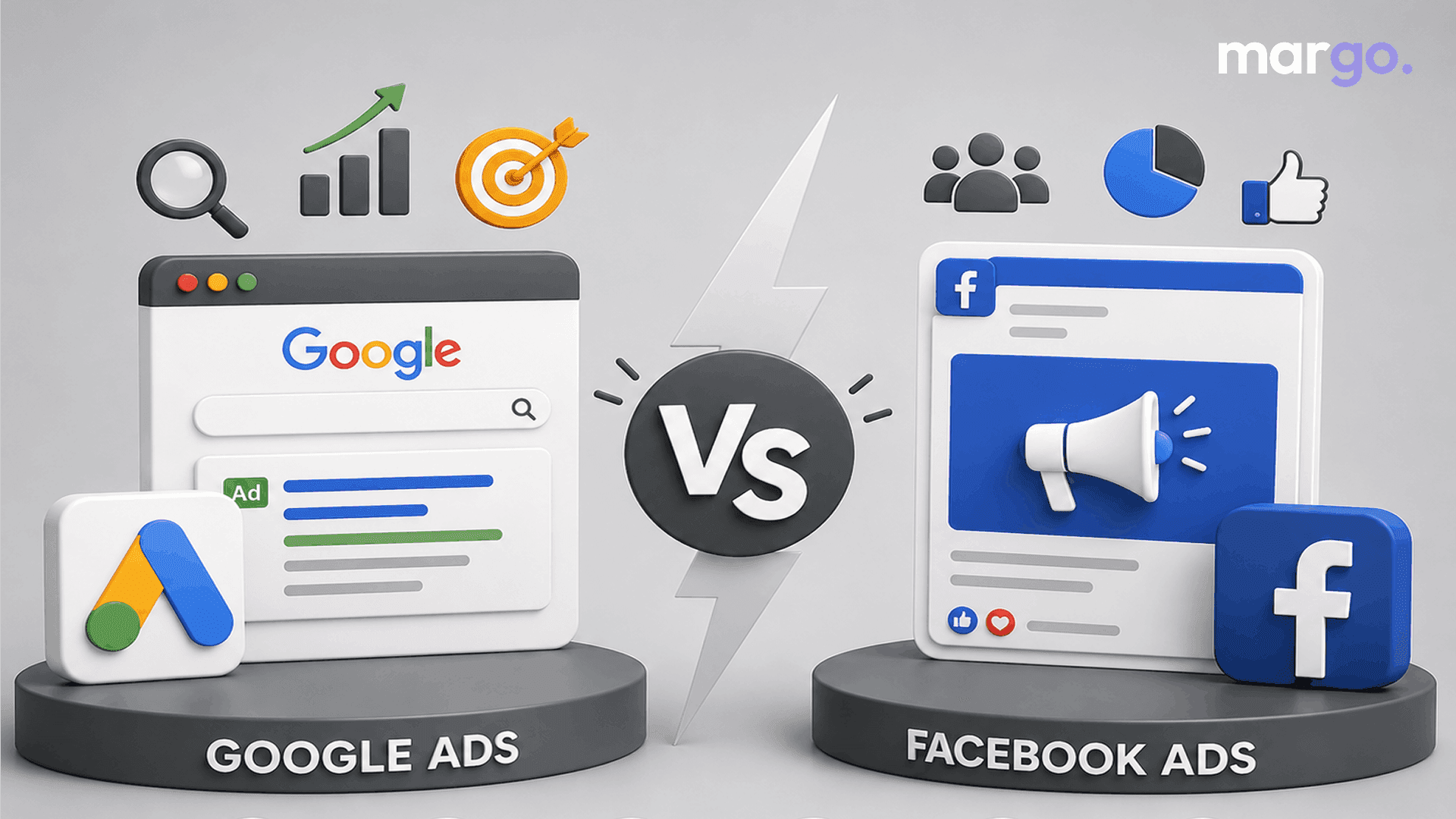
When people talk about paid advertising platforms, Google and Facebook are the first two names that come to mind. They make up most of the money spent on digital ads around the world, but they work in very different ways. If you're trying to decide how to spend your marketing money, you need to know about the Google Ads vs. Facebook Ads debate. We'll tell you what each platform does, how they're different and how to choose the right one for your business.
What Is Google Ads?
So what is Google Ads really? Google Ads is the online advertising network of Google that enables businesses to advertize on Google Search, YouTube, Gmail and millions of other websites connected to Google Ads. Most of Google's advertising is intent-based, that is advertisements are shown to people who are actively looking for some information, product or service.
For example, if a potential customer looks for "emergency plumber near me," a plumbing company that has Google Ads is sure to show up at the top of the results. This is a great way to get buyers ready to buy.
What Is Facebook Ads?
But what are Facebook Ads, then? Meta also has an ad network, Facebook Ads, that lets businesses run ads on Facebook, Instagram, Messenger and the Audience Network. Facebook ads are mostly driven by interests and behavior, not active search intent. So they get ads based on their demographics, interests, behaviors, and connections, not on what they're actively searching for.
That's why Facebook ads are great for getting the word out about your brand, showing off your pretty products and getting in front of people who might not even know they need your product or service yet.
Google Ads Facebook: Key Differences
There are few basic differences between Google ads and Facebook that stands out:
1. Intent vs. Interest
People who are in search of something are the ones that google ads usually target. Facebook ads reach them who may not be searching but fit a considerable audience profile by looking at the likes and dislikes.
2. Types of Ads
Google Ads is primarily about text-based search ads. They also use display banners, shopping ads and video ads on YouTube. Facebook Ads is very visual. It uses videos, carousels, images and stories to catch attention of those scrolling.
3. Targeting Capabilities
Google ads targeting depends on keywords along with search queries. Demographics and remarketing are also equally important. Facebook ads let you target people depending on interest, demographics and behaviors. It lets you to create "lookalike" audiences based off of your existing customers.
4. Stage in the Buyer Journey
Google Ads is best for people who are ready to make a decision or buy, further down the buyer's journey. Facebook ads work best at the beginning when they are creating awareness and they continue to work well over time to keep people interested.
5. Pricing
Both platforms are based on pay-per-click (or impression) auctions, but pricing varies a lot depending on industry, competition and targeting. Some keywords are very competitive in Google Ads and can be expensive. But Facebook Ads also tends (not always) to have a lower cost per click. This is great for campaigns that are focused on raising awareness.
Benefits of Google Advertising
Here are some of the common benefits of Google advertising:
- High purchase intent: It talks to people who are looking for answers at the moment.
- This can be used by multiple users like Google Search, YouTube, and the Display Network.
- ROI, which can be measured thanks to good tracking and conversion attribution tools.
- Local targeting works well for "near me" and other location-based searches.
Advantages of Facebook Advertising
Now, let's take a quick look at some of the benefits of Facebook advertising: Laser audience targeting:
- You can target people based on their demographics, interests, and behaviors.
- Visual storytelling works for brands that have easily seen products or content.
- Cost-effective awareness building means you can get a lot of people to know about it for not much money."
- Retargeting features: Solid tools for getting your website visitors and past customers to engage with you again.
- Social proof: Comments, likes, and shares bring credibility to the ad right in the text.
Online Advertising Comparison: Which Should You Choose?
These are two paid advertising platforms for online advertising. What is best for your business depends on what your business wants, what it does and what it can afford.
Select Google Ads if:
- People are looking for what you have to offer.
- You run a store or service business in your area, like a plumber, lawyer, contractor, etc.
- You want traffic that is ready to buy and has a strong intent to do so.
- You want direct-response conversions that you can track.
Select Facebook Ads if:
- You sell clothes, food, home goods and other stuff that looks good.
- You are talking to people about your brand or a new product.
- You want to reach a certain group of people based on what they do or what they care about.
- You can afford to pay less per click and get more people.
Consider using both if many successful businesses use both at the same time. They use Facebook ads to create interest and word of mouth, and Google ads to serve people when they're looking for solutions down the line. Using more than one platform together often leads to better overall results than using just one.
Closing Thoughts
Compare Google Ads and Facebook Ads, and there is no clear winner. Each platform has its advantages. Google advertising is second to none for driving high-intent search traffic. In contrast, Facebook advertising is a great way to get the word out about your brand and reach the right people.
Most of the time, the best thing to do is not to choose one over the other but to figure out how each works into your overall marketing funnel. The best way to get the right paid advertising mix for your business is to test different platforms and review the data on their performance. Then you can allocate your budget where you get the best results.
Frequently Asked Questions
Your industry and competition will affect your CPC, but generally Facebook Ads are cheaper than Google Ads. Google Ads convert better, but they are more expensive because of competition on high-intent keywords.
Yup. Both of these platforms have been successful for many small businesses. They begin with the one that suits their needs at the moment and add more as the budget allows.
They both are good for shopping online. Facebook Ads are good for finding new products and for visualizing them. Google Ads (and Shopping Ads in particular) are a great way to get in front of people who are in buy mode.
Nuh-uh. Start with a small daily budget for Google Ads and Facebook Ads, and scale up as you start to see results.
Facebook Ads is often considered a little easier for newbies as it offers a visual ad builder. But learning Google Ads is a little harder in terms of keyword research and how to bid.