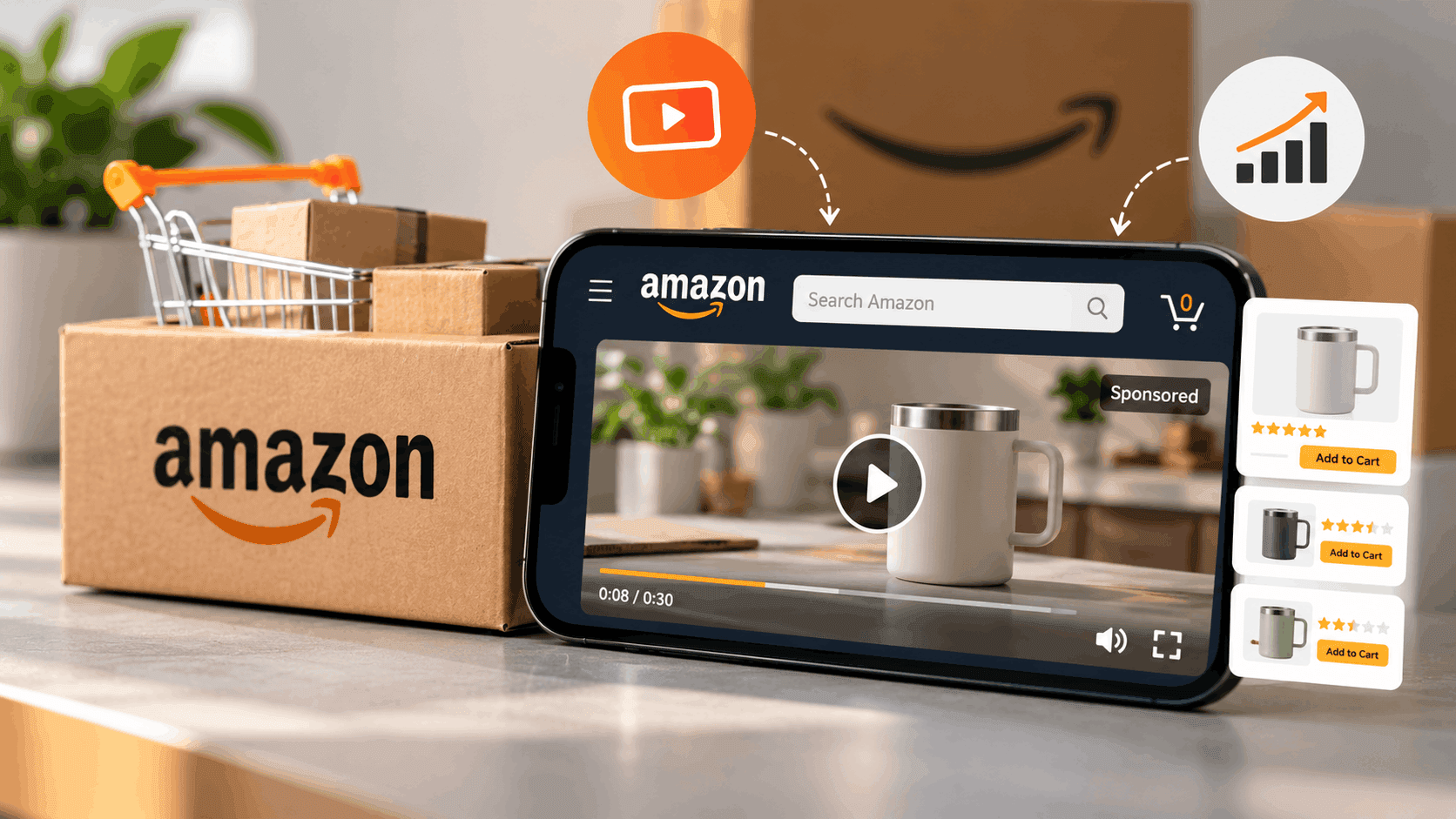
A static product photo tells a shopper what something looks like. A video tells them how it works, how big it actually is, or what it sounds like when it runs, and that difference shows up directly in whether a shopper clicks. Amazon video ads exist to put that extra layer of proof in front of shoppers at nearly every point in their journey, from a search results page to a Fire TV screen.
What are Amazon video ads?
Amazon video ads are paid placements that run short-form or long-form video content across Amazon's owned properties and its wider ad network, rather than the static images used in standard Sponsored Products listings. The umbrella term covers several distinct formats, from video clips inside search results to full-screen commercials on streaming devices, and each one is built for a different stage of the shopping journey.
This is sometimes called amazon instant video advertising, though that phrase is a holdover from Amazon's older streaming brand name. In current Amazon Ads terminology, the formats sit under Sponsored Brands, Sponsored Products, Display, and Streaming TV, each with its own placement rules and creative specs.
Types of Amazon advertising video
| Format | Where it appears | Best for |
|---|---|---|
| Streaming TV ads | Prime Video, Fire TV Channels, connected TV | Full-screen, non-skippable brand awareness |
| Online video ads | Amazon-owned devices, affiliated sites, premium publishers | Reaching shoppers off Amazon while they browse |
| Sponsored Brands video | Amazon search results and product detail pages | Autoplay storytelling that competes directly in search |
| Sponsored Products video | Amazon and select premium apps and sites | Long-form, interactive content that supports a purchase decision |
| Display ads with video | Amazon homepage, detail pages, IMDb, Amazon Publisher Services | Autoplay video woven into the shopping and browsing journey |
| Amazon Live | Amazon's livestream platform | Real-time, interactive product demonstrations |
Why amazon advertising video works
Video ads aren't just a nicer-looking version of a static ad, they perform differently. Amazon's own research found Sponsored Brands video ads generate a click-through rate 17.7 times higher than static images when the video plays unmuted, and brands running video alongside static ads saw 10% higher year-over-year sales growth than brands relying on static creative alone.
Sound matters more than most advertisers expect. That same research found unmuted video maintained a click-through rate over three times higher than muted video across every length tested, which is a strong argument for designing video that works even without captions, since autoplay on Amazon typically starts muted until a shopper interacts with it.
Amazon product video requirements
Sponsored Brands video, the format most sellers run first, has to meet a specific technical spec before Amazon will approve it. The current Sponsored Brands video specifications are:
| Requirement | Spec |
|---|---|
| Length | 6 to 45 seconds (20 seconds or under recommended) |
| Resolution | 1920x1080px (1280x720 or 3840x2160 also accepted) |
| Aspect ratio | 16:9 |
| File size | 500MB maximum |
| File format | MP4 or MOV |
| Video codec | H.264 or H.265 at 30fps |
| Audio | Stereo, AAC/MP3/PCM, 96kbps, 44100Hz |
Streaming TV and online video ads run to different specs and typically require a longer runtime built for full commercial breaks rather than the short autoplay clips used in search results, so a video built for one format usually needs re-editing rather than a straight re-upload for the other.
Amazon ad examples: what good video creative looks like
The strongest performing Sponsored Brands videos tend to follow a handful of repeatable patterns rather than reinventing the format each time. A product-in-use demo that shows the item solving a real problem in the first three seconds, a size or scale comparison against a familiar object, and a quick before-and-after result are the three structures that show up most often across top-performing listings.
Streaming TV creative works differently, since it's watched full-screen with sound on by default. The strongest examples there lean closer to a traditional commercial, with a clear brand moment in the opening seconds and a single, simple call to action rather than the dense on-screen text that works in a muted, scroll-past search placement.
Amazon video ads best practices
- Design for muted autoplay first. Since Sponsored Brands and display video often starts without sound, the first few seconds need to communicate the product visually, with on-screen text as backup rather than a voiceover shoppers won't hear.
- Keep it under 20 seconds where possible. Amazon's own guidance recommends this length for Sponsored Brands video, and shorter videos are less likely to get skipped in a fast-scrolling search results page.
- Lead with the product, not the logo. Shoppers are already searching for a solution, so opening on the product solving their problem outperforms an opening brand slate.
- Match the format to the placement. A 45-second Streaming TV spot and a 15-second Sponsored Brands clip need different pacing, not just different lengths, since one is watched passively and the other competes for a click.
- Test video against static regularly. Category and audience affect how much lift video delivers, so running both side by side is the only reliable way to confirm the format is earning its budget for a specific product.
Margo Digitech builds and manages Amazon video creative as part of its broader Amazon Ads work, treating video as a standard line item in a campaign rather than a one-off addition once other formats are already running.
Frequently Asked Questions
They're used to show a product in motion, whether that's a demo, a size comparison, or a lifestyle scene, in the placements where Amazon shoppers are already searching, browsing, or streaming content.
Not officially. Amazon's current terminology covers video formats under Sponsored Brands, Sponsored Products, Display, and Streaming TV Ads, though the older phrase still shows up in search from Amazon's earlier streaming branding.
A Sponsored Brands video needs to run 6 to 45 seconds, in MP4 or MOV format, at 1920x1080 resolution with a 16:9 aspect ratio, and stay under 500MB.
Pricing runs on the same auction model as other Amazon ad formats, so cost depends on competition for the keyword or placement rather than the format itself, though video often needs a larger upfront production budget than a static image.
Yes. Sponsored Brands video doesn't require studio-level production, and a simple, well-lit demo shot on a phone that follows the format's spec often outperforms a polished ad that ignores muted-autoplay behavior.