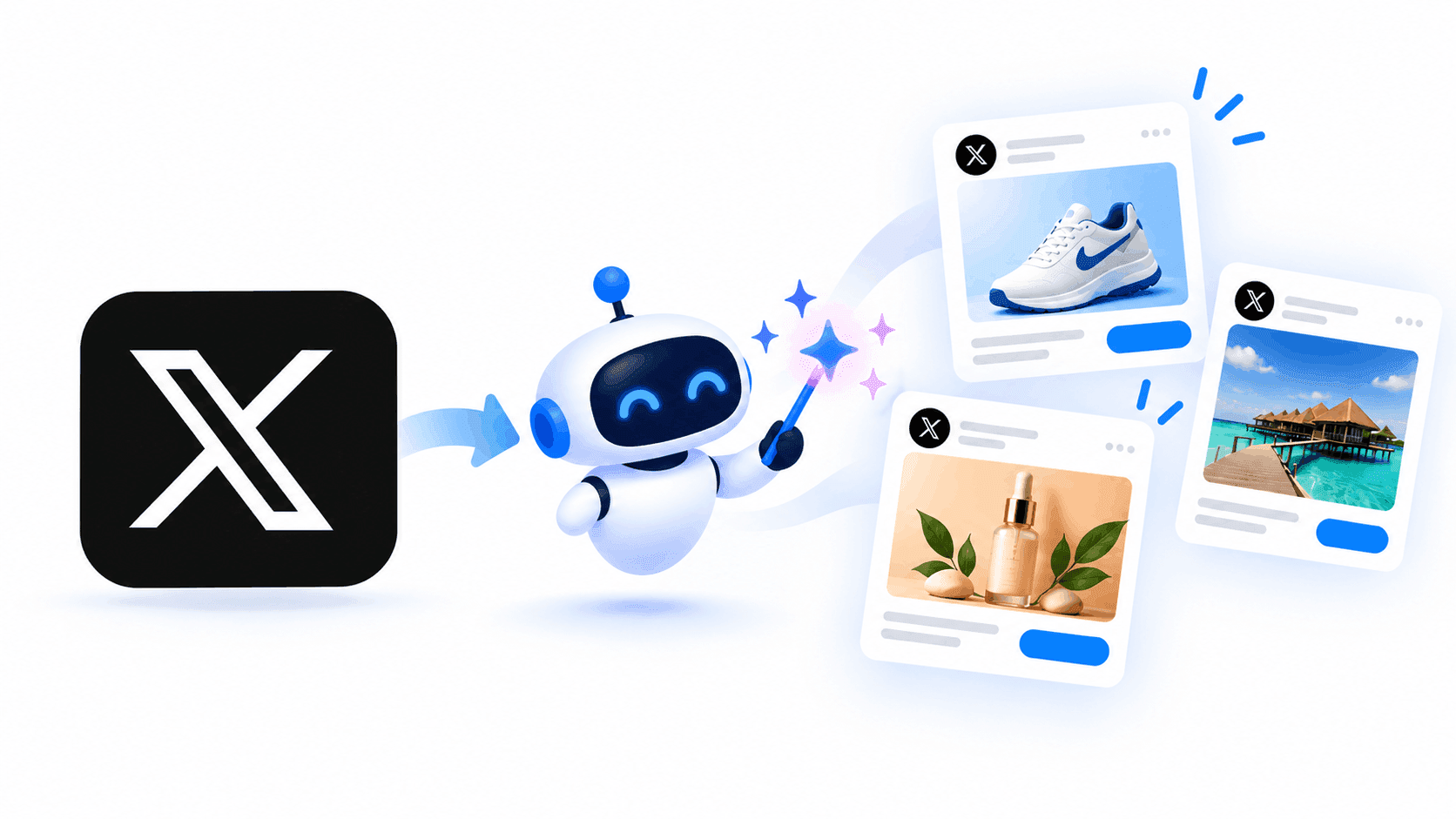
X has introduced X Lift, an AI-powered ad product that creates campaigns from little more than a website address. Announced at Advertising Week New York and first reported by Social Media Today, the tool is aimed at cutting the manual steps that make advertising on the platform slow and fiddly.
How X Lift Works
An advertiser enters a business URL, and X's AI generates a range of ad options, including images and copy. The advertiser picks the ones they like and uses them in a campaign. According to Social Media Today, the process can also build targeting for the full campaign, so the advertiser only has to set a budget. X describes it as its first product to combine speed, scale and intelligence. The system was reportedly trained on X ads, which suggests some built-in awareness of what performs on the platform.
Who It Is Built For
New advertisers are the main target, since they face the steepest learning curve. Experienced marketers could also use it to draft and launch simple campaigns quickly. X Lift builds on Prefill with Grok, a feature announced in February 2025 that generated ads from a web address and reached a limited set of advertisers. X Lift extends that idea to targeting and campaign setup.
The Bigger Picture for X Ads
X launched a rebuilt, AI-powered ad platform on April 30, 2026, with newer retrieval and ranking systems. Monique Pintarelli, head of global advertising at xAI, said the new stack allows faster feature launches and that advertisers should expect frequent updates. X says active self-serve advertisers grew 50 percent in the third quarter of 2026 compared with a year earlier, though that is a company figure. Many advertisers pulled back after Elon Musk bought the company in 2022, and eMarketer forecasts X ad revenue of about 2.46 billion dollars in 2026.
X is not alone in the push. Digiday reported that TikTok, Meta and X all stressed AI creative tools at Advertising Week, with Meta expanding access to its Ads Creative Studio. An Enders Analysis researcher noted that keeping creation, testing and activation in one place reduces friction for advertisers.
What Advertisers Should Do
The product is unproven. No independent performance results have been shared, and pricing, rollout timing and how much a campaign can be edited after the AI builds it have not been detailed. Marketers who try it should start with a small test and compare results against manually built campaigns. They should also check that the copy matches brand claims and voice, review the audience the tool selects, and set specific goals, since vague inputs tend to produce vague results.