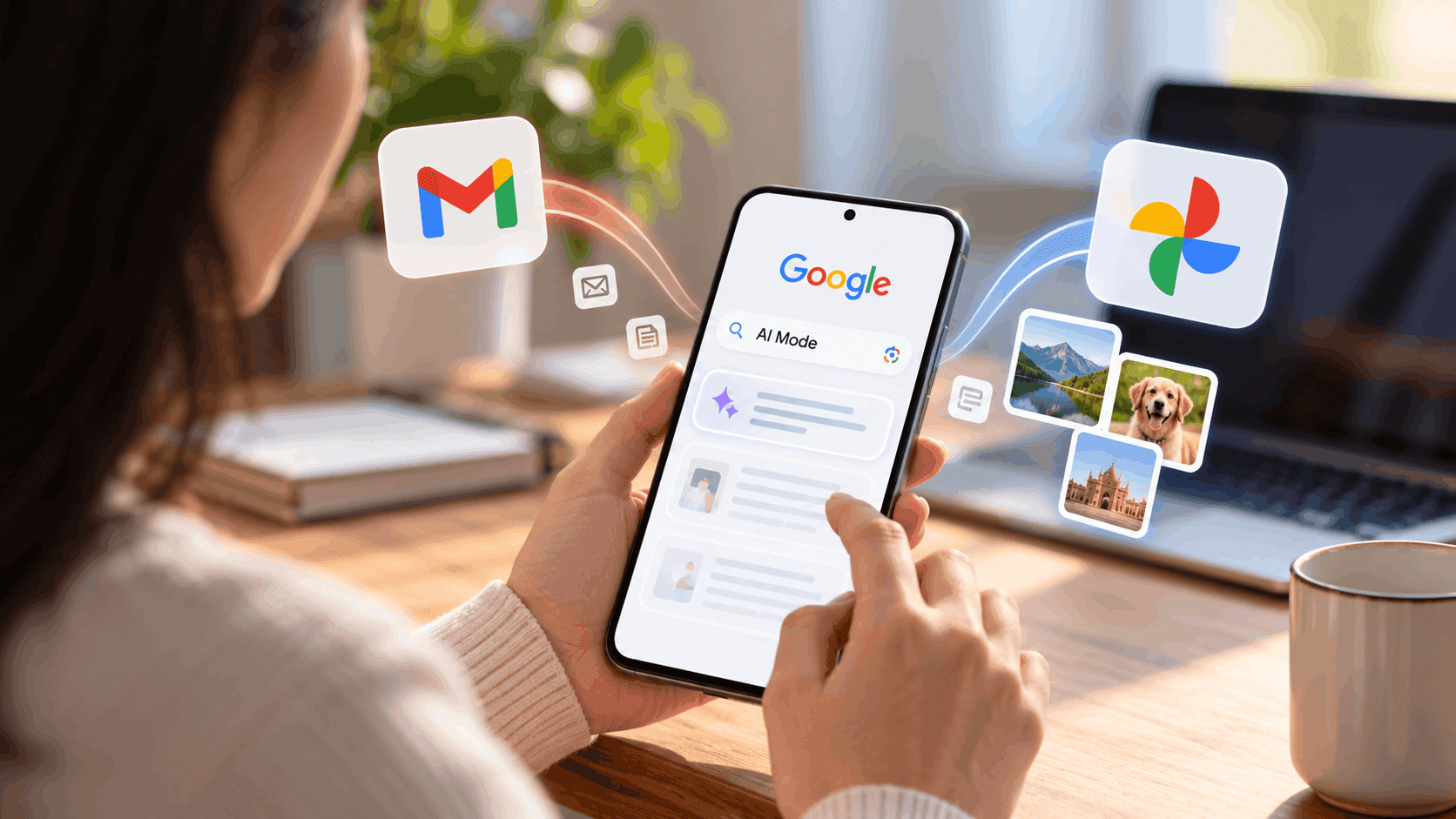
Google is testing ads inside AI Mode that can be personalized using information from a user's connected Google apps, such as Gmail and Google Photos, through its Personal Intelligence feature. Search Engine Land reported on October 16 that Google confirmed the test. The experience had been ad-free when Personal Intelligence first launched.
What Google Says It Will and Will Not Use
According to Google's help page, ads will not be based directly on a user's Gmail inbox or Google Photos library. Search may use summaries, excerpts and inferences from those apps, and the same information may be used to show ads. Personalized ads will not rely on sensitive categories, which Google lists as race, religion, sexual orientation and health. Advertisers do not get access to Gmail or Google Photos, connecting apps is optional, and users can disconnect at any time.
How Personal Intelligence Reached This Point
Personal Intelligence launched in January as a Labs feature in AI Mode for English-language Google AI Pro and Ultra subscribers in the US, with no mention of ads. In March it expanded to all free US users with personal Google accounts. Connected apps are now listed as available to users aged 18 and older in 188 countries and territories. Google Calendar has joined Gmail, though only in the US and in English, and other Workspace apps are listed as coming soon. Users need a personal Google account with the Personalized Recommendations setting turned on.
Privacy Controls Are Changing
Google is replacing the Web & App Activity and Search Personalization controls with two new settings, Search Services History and Personalized Recommendations, rolling out over the next few months. Connected data may also be used to train Google's generative AI models through summaries, excerpts and inferences. A subset of data processed by AI Mode and Ask Maps may be seen by human reviewers, so Google advises against connecting apps that hold personal or confidential information.
How It Compares With ChatGPT
OpenAI has described memory-based ads in ChatGPT, using select signals from a user's broader ChatGPT experience when ad personalization is on. The difference is the source: OpenAI draws on signals from ChatGPT itself, while Google's come from Gmail, Calendar and Photos accounts people have used for years. OpenAI's monetization lead, Asad Awan, has said some conversations, such as a photo of a child's bruise, should never carry an ad.
What Advertisers Should Know
Google says test ads will still reflect the user's query, the context of the AI response and the user's interests. The help page's ads answer covers Search Services broadly, including AI Mode, Discover, Maps, Shopping, Flights, Hotels, Translate and News, and Google has not said whether connected-app signals will personalize ads beyond AI Mode. No advertiser controls, targeting options, reporting or wider rollout have been announced. Google began testing Conversational Discovery ads and Highlighted Answers in May, formats where Gemini writes the ad creative for each query.