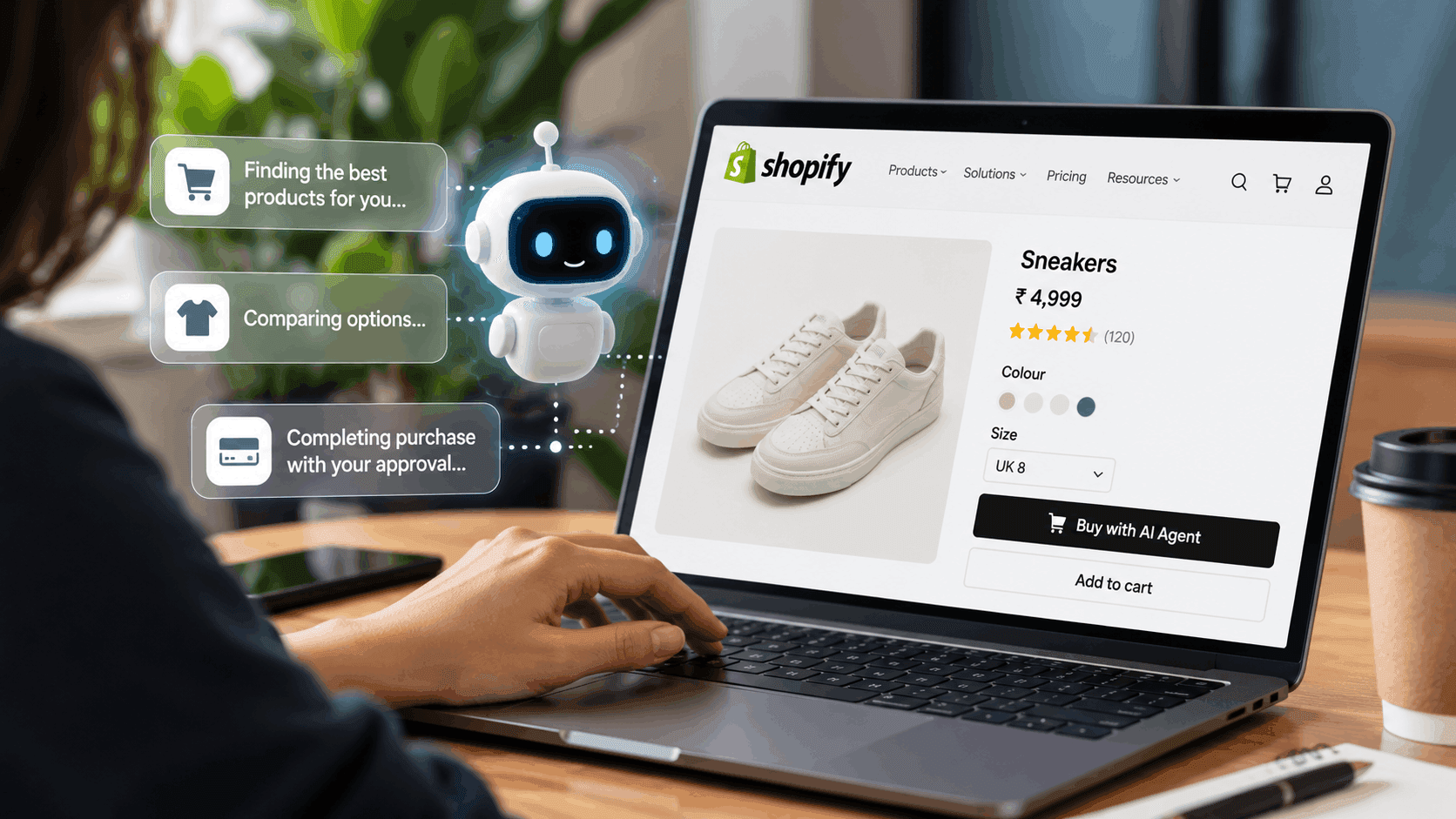
Shopify is letting AI shopping agents go all the way to checkout on merchant sites, expanding its support for the Web Model Context Protocol, or WebMCP, to cover the final and most sensitive step of a purchase. With buyer authorization in place, agents can now complete orders directly, a stance that puts Shopify at odds with retailers such as Amazon and Adidas, which have been actively blocking similar AI agents from transacting on their platforms.
What the Update Adds
The expansion introduces three new tools for agents operating in the browser. One lets an agent inspect checkout details, another allows it to update information such as a customer's address or delivery preferences, and a third submits the order once the buyer has given authorization. The feature also integrates with Shop Pay and is rolling out across all eligible Shopify merchants rather than a limited pilot group.
Building on Existing Agent Support
Shopify had already opened up WebMCP for storefronts and shopping carts, letting agents search a merchant's inventory and add items on a shopper's behalf. This latest move extends that groundwork through to the actual transaction. The company runs two parallel systems for agentic commerce: a hosted MCP server for server-to-server interactions, and WebMCP for agents operating inside a browser, with both built on Shopify's Universal Commerce Protocol.
Shopify's Reasoning
Gil Greenberg, Shopify's staff product manager for agentic commerce, framed the update around user experience, saying shopping with an agent should not feel like watching paint dry. He said agents should be able to use the WebMCP tools available on storefronts and at checkout to complete order placement efficiently, positioning the update as removing friction rather than simply chasing a trend.
Where This Fits in the Agentic Commerce Race
The rollout lands alongside notable partnership news, with AI agents Muse and Instinct already tied to Shopify for agentic commerce, and Instinct's partnership announced on the very same day as this checkout expansion. The contrast with Amazon's more defensive posture toward AI shopping agents highlights a growing split in how major commerce platforms are choosing to handle this shift, with some racing to accommodate agentic buying and others moving to control or restrict it.